Purple Passions of High Summer

Happy Lughnasad, dear Friends of The Green Farmacy Garden!

This Gaelic Festival marks the beginning of the harvest season and the midpoint between the Summer Solstice and Autumn Equinox: the very height of summer, and a celebration of the season’s abundance. Local tomatoes, summer squash, cucumbers, green beans, garlic, corn, and of course, peaches! are furnishing cookouts, stews, ragouts, sauces, and cobblers for both summer meals and winter preservation.

Honey bees (Apis mellifera) are still looking, but finding less to eat during the summer dearth, as the trees have all finished blooming and late blooming perennials haven’t fully flushed. Here in the Garden, their buzzing stopped me in my tracks as I approached the Jujube (Ziziphus jujuba), afraid I was going to step on a nest. I’ve read that honeybees visit and pollinate the native Passionflower (Passiflora incarnata), but I’ve never personally seen them. In the (hopefully temporary!) absence of the Devil’s Walking Stick (Aralia spinosa) they’re probably missing as much as I am, along with so many other pollinating insects, the Garden’s mainly offered assorted coneflowers til the Goldenrods (Solidago sp.) started popping this week.
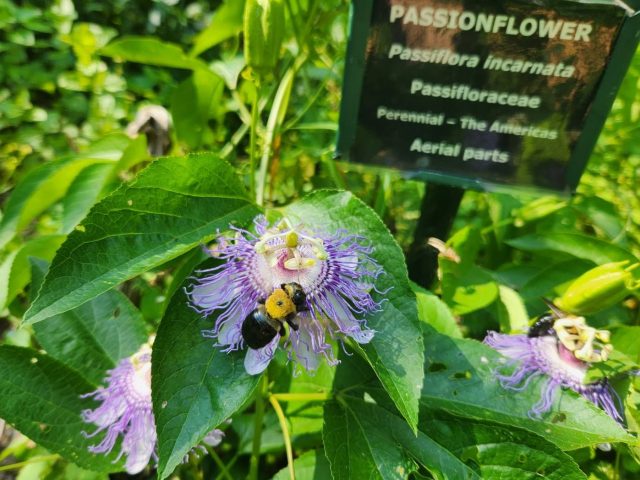
Carpenter Bees (Xylocarpa virginiana) like the one pictured above are the primary pollinators of the native Passionflower, which is currently ripening many smooth lime-green ovoid fruits larger than a chicken egg, called Maypop — when they’re ripe, the fruits will burst open when squeezed.

Last year, the native Prickly Ash (Zanthoxylum americanum) appeared to be the Spotted Lanternflies‘ (Lycorma delicatula, or SLF) favorite, (yes, there’s SLFs on our Grapes (Vitis sp.), but not as many as on the Prickly Ash) and they’re still all over it (see below, left), though not in the densities they’ve surged in other places you’ve likely seen in person or in photos. This year I noticed lots of adults on the Bai Zhi (technically the name of Angelica dahurica root as prepared and used in Traditional Chinese Medicine), as pictured above left. As you can see below right, the Angelica is unharmed. The Prickly Ash has also showed no signs of damage from this concentration of SLF feeding.

For those concerned about SLF, take heart in the research results out of Penn State looking “at the long-term impacts of feeding pressure on Northeastern hardwoods.. results suggest that we are unlikely to see big impacts on the growth of trees,” and this year’s showing that several widespread arthropod predators consume SLF in all life-stages, regardless whether they’ve been feeding on Tree of Heaven (Ailanthus altissima) or not. Look at those Spined Soldier Bugs (Podisus maculiventris) go!! In the predation chart from that study, included at the end of this post.

Also pictured above, top right, is a Blister Beetle (Epicauta sp.), a native insect I’d never heard of, which both contains and secretes a poisonous chemical, cantharidin, that can cause blistering, though it’s apparently also been used as a (sometimes fatal) aphrodisiac!!? Above middle right, a Japanese beetle (Popillia japonica) enjoys a Passionflower bloom, and bottom right a Crescent (Northern? Pearl?) butterfly (Phyciodes sp.) rests in the Oregano (Origanum vulgare).

Some lower drama delights, though still breathtaking to me, pictured below, clockwise from top left:

  • New shoots erupt from under thick bark on the fallen, now nearly horizontal, Willow (Salix sp.) trunk in Angina;
  • I keep finding little piles of smooth, shiny, gray Somethings in Goldenseal (Hydrastis canadensis) leaves under where the berries would’ve been, and have become convinced they’re seeds – which we can collect to share and propagate!;
  • I couldn’t find online any reference or examples of other Witch Hazel (Hamamelis virginiana) fruits showing this spiky phenomenon.. you can see surrounding the spiky one featured are several normal fruits — any information would be welcome!;
  • Coral-pink Merulius (Phlebia incarnata) fruiting on a Log Erosion Barrier in the Garden, alongside its common companion Stereum ostrea;
  • Blackberry Lilies (Iris domestica), used medicinally in China, Korea, Japan, Vietnam, Indonesia, Nepal, Malaysia, the Philippines for a variety of issues, standing tall (for once.. they often flop over) in full bloom;
  • Elderberries (Sambucus canadensis) ready to harvest.

Our annual Harvest Gala is fast approaching!

Join us on Thursday, October 16 at the Meeting House in Columbia from 6-8:30pm for live music by Miss Moon Rising, flavorful fare from Koshary Corner, a sensational silent auction, and fun community building opportunities. 

Get your tickets here!

Learn about sponsoring the gala here.

Along with an assortment of CEI fundraiser merch, we’ve reopened ordering for the Green Farmacy Garden t-shirts featuring this block print design by local artist Nikita Yogaraj. Peruse all the options of totes & garments

We’re grateful for your support, and your collaboration in our efforts to cultivate communities where people and nature thrive together!
As always, our Public Events page offers more upcoming events at the GFG, and you can explore CEI’s core Programs and full event calendar on the website. We look forward to sharing the Garden with you! -Veri for The Green Farmacy Garden team

SLF Predation chart from research paper linked above

All images by Veri Tas.
Posted in environmental education, medicinal and edible plants | Tagged , , , , , , , , , , , , , , , , , , , , , , , , , , , , | Leave a comment

Snakes and Skinks and Newts, Oh My!

Welcome to summer, dear friends of The Green Farmacy Garden!
For us, it’s brought a marked increase in temperatures, but so far the rains are keeping up.. sometimes a bit excessively. It’s posed challenges and inconveniences for both plant care and event hosting, but has largely caught up our part of Maryland from last year’s drought — and the plants, and fungi, and I, are grateful.

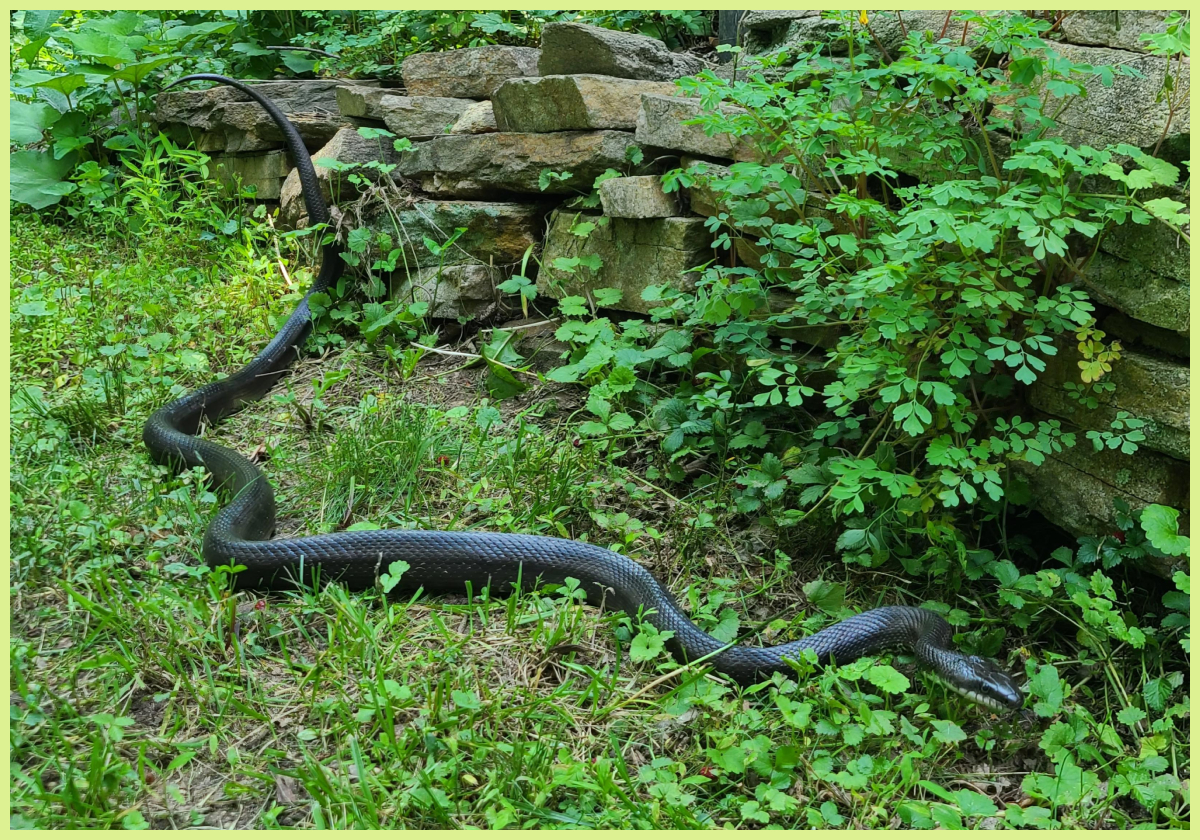
This impressive friend (above) made their way through the Garden in early June, with little concern or pause for the 3 of us working in their path that afternoon. The Eastern Ratsnake (Pantherophis allegheniensis) frequently reaches the 5’+ length of this specimen, and may be tied with Ring-necks (Diadophis punctatus) as the snake we see most frequently on the premises. Northern Water Snakes (Nerodia sipedon) make a less frequent appearance.

Some stunners from the Garden this month include, pictured above, clockwise from top right: new leaves of Hardy Banana (Musa acuminata ‘Novak’) start out tightly rolled; Scarlet Runner Bean (Phaseolus coccineus); Plumeria (Plumeria sp.), Bee Balm (Monarda didyma) in bloom.

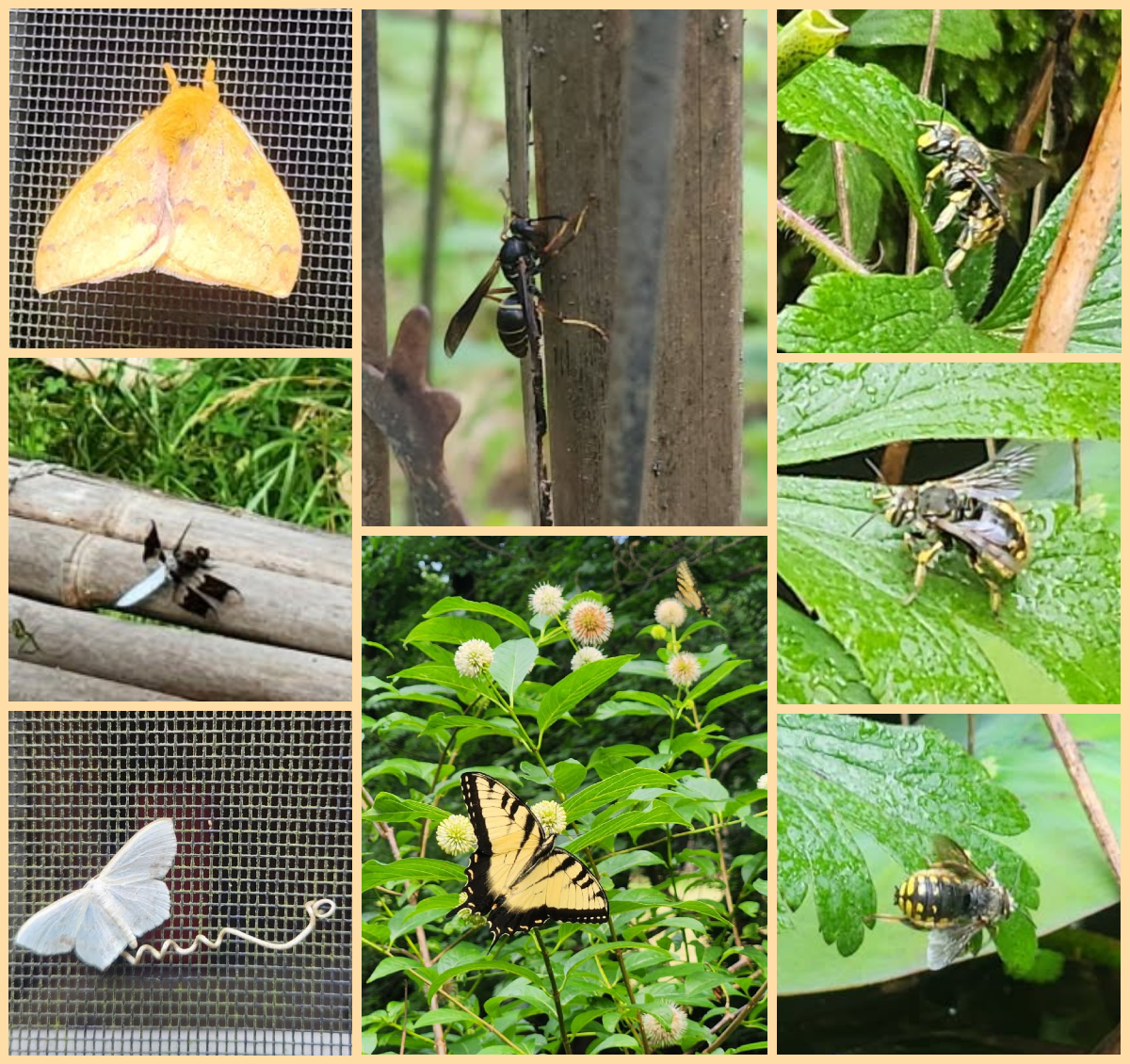
At first I thought the little critter pictured 3 times down the right side below was a wasp, but using my ID process, it seems they’re actually a Wool-Carder Bee (Anthidium manicatum), a species of which I was previously unaware. Following leads from a Google reverse image search through with exploration of Maryland Biodiversity Project and Insect Identification‘s photo gallery, I posted my eventual guess to iNaturalist and – for this specimen only! – another user confirmed the ID very quickly! The rest of my observations are still waiting for others to weigh in. iNat and Maryland DNR Wildlife‘s excellent photographic guides are among the other top resources I consult to try confirm identification guesses. If you know of others, please share them and I’ll boost them here to other interested parties too!

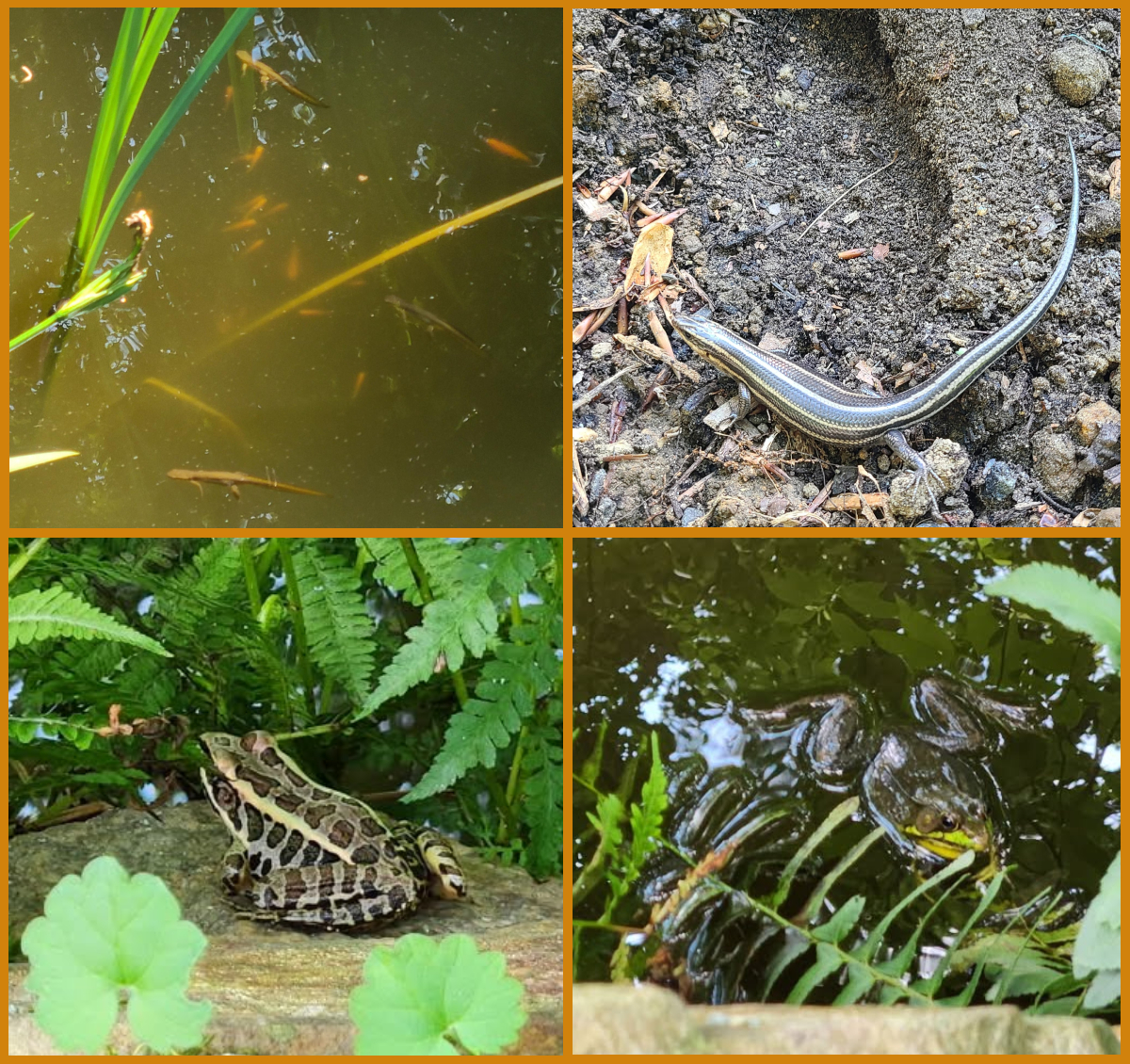
Based on such internet research, my current best guesses for the critters pictured above, clockwise from top left are: several Eastern Newts (Notophthalmus viridescens) float in the pond, catching some sun amidst the fish; a Common 5-Lined Skink (Plestiodon fasciatus) enjoys the Garden; a Pickerel Frog (Lithobates palustris) chills by the pond; and a Green Frog (Lithobates clamitans) floats in the sun along the pond edge.

And the insects pictured below, clockwise from bottom left and skipping the right column of [presumed] Wool-Carder Bee, may be: Snowy Geometer Moth (Eugonobapta nivosaria); Common Whitetail (Plathemis lydia) dragonfly; Io moth (Automeris io); this Paper Wasp (Polistes sp.) drew my attention by chewing on the bamboo stake; and Eastern Tiger Swallowtail (Papilio glaucus) nectars on Buttonbush (Cephalanthus occidentalis).

It’s humbling and gratifying learning about the other beings the diverse plants of the Garden and grounds support!

Families and friends who joined us for our second annual Children’s Day celebration collaborated to harvest vermicompost and restock the bin, ventured on Scavenger Hunts and a StoryWalk through the Garden and around the grounds, made eco-prints on cloth by pounding plant parts with a mallet, met medicinal plants on a Garden tour, created and exchanged freeform artwork, and wove new community connections (some snapshots below). We’re so happy to be sharing the magic of this site with more young ones!

As always, our Public Events page offers more upcoming events at the GFG, and you can explore CEI’s core Programs and full event calendar on the website. We look forward to sharing the Garden with you! -Veri for The Green Farmacy Garden team

All images by Veri Tas except Eastern Ratsnake , Common 5-Lined Skink, and Eastern Newts by Erik van den Valentyn.

Posted in environmental education, medicinal and edible plants | Tagged , , , , , , , , , , , , , , , , , , , , , , , , , , | Leave a comment

May Migratory Visitors and New Plants to Share

Are you ready for summer, dear friends of The Green Farmacy Garden?
You can feel it in the air this week – summer’s just around the corner!

Pictured above, a little wildlife rainbow waves to celebrate and support our diverse community this Pride Month:

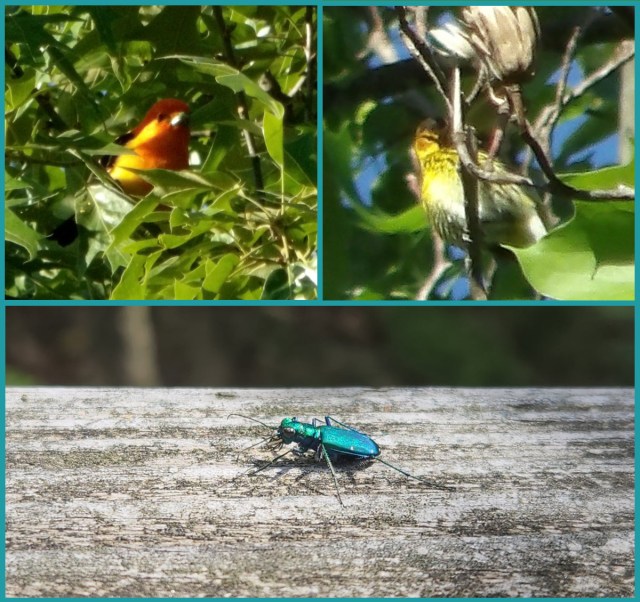
Friend of the Garden Terri Berkheimer spotted these two shy songbirds, along with 25 other species cataloged on eBird in an early May visit. Maryland is within the breeding range of the Scarlet Tanager (Piranga olivacea, top left), but the Cape May Warbler (Setophaga tigrina, top right) only passed through briefly, heading north from the Caribbean region where it spends the winter to its breeding range in Canada and some of the northernmost eastern United States. Your next chance to spot one in Maryland will be in the fall (possibly as early as August) when they migrate back south for the winter.

The hue of this iridescent Six-Spotted Tiger Beetle (Cicindela sexguttata, bottom) is on the blue side of their color range – they’re often fully green, and usually flit away far too fast for me to photograph them; I was grateful to this one for hanging out near me on the porch railing for so long!

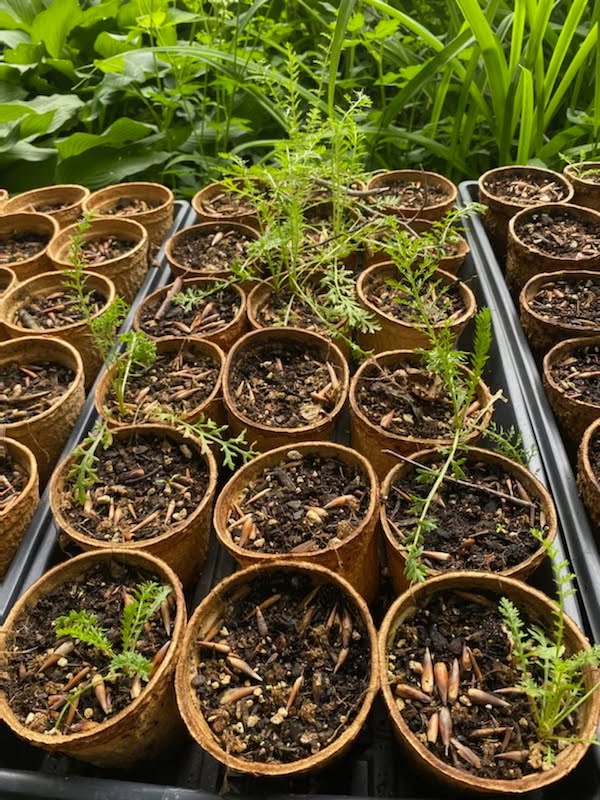
We’re aiming to share more medicinal plants that do well in our area. Beginning on Children’s Day, we’ll have some young medicinal plant (and Thai Basil) seedlings available for purchase, including the Yarrow (Achillea millefolium, left) and Self-Heal (Prunella vulgaris, right) pictured above. Both Yarrow and Self-Heal are edible in small quantities and have been traditionally used to ameliorate various health conditions in cultures around the world (Wikipedia and pfaf.org have well-cited starting points).

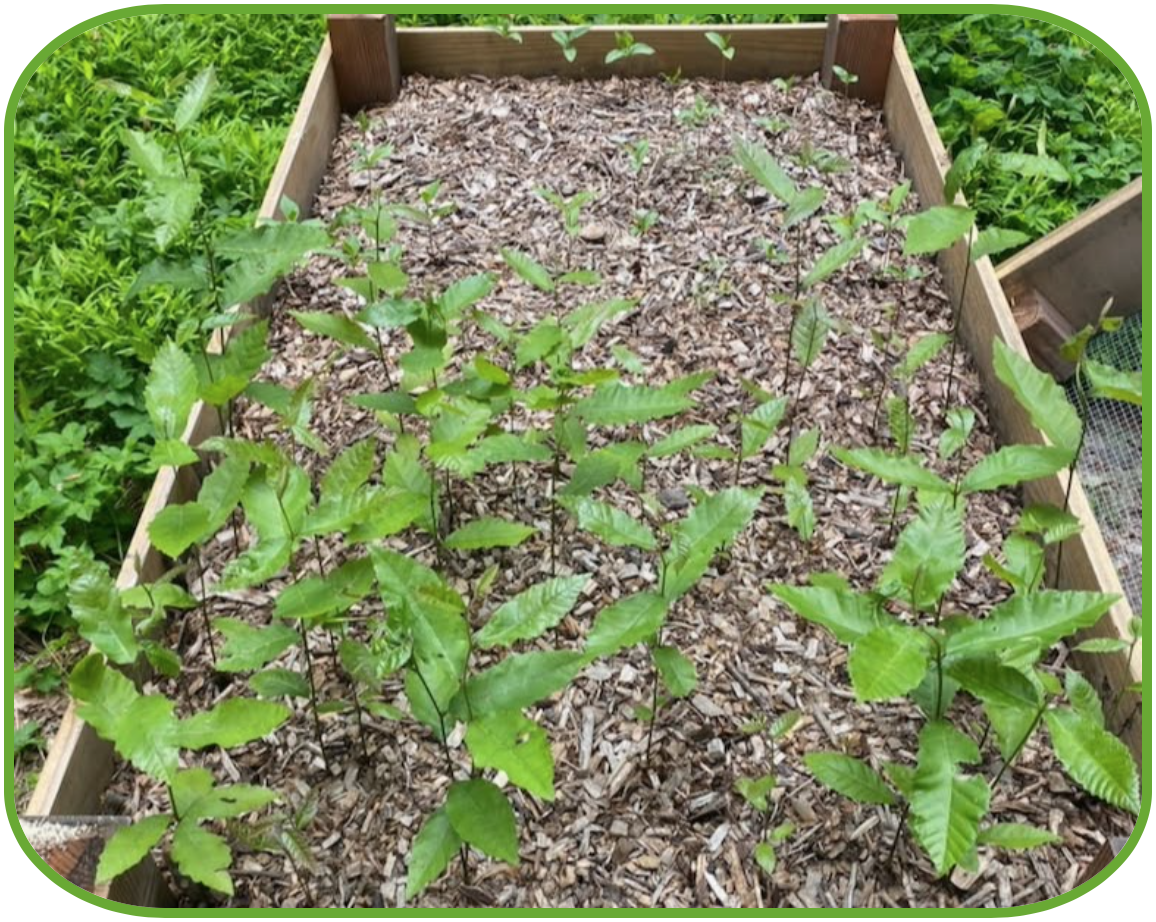
The first batch of woody plants in our new air pruning beds are enthusiastically establishing their root systems. Later this season, we’ll be able to share hybrid Chestnuts (Castanea sp., foreground below) and select PawPaw (Asimina triloba) seedlings to new homes!

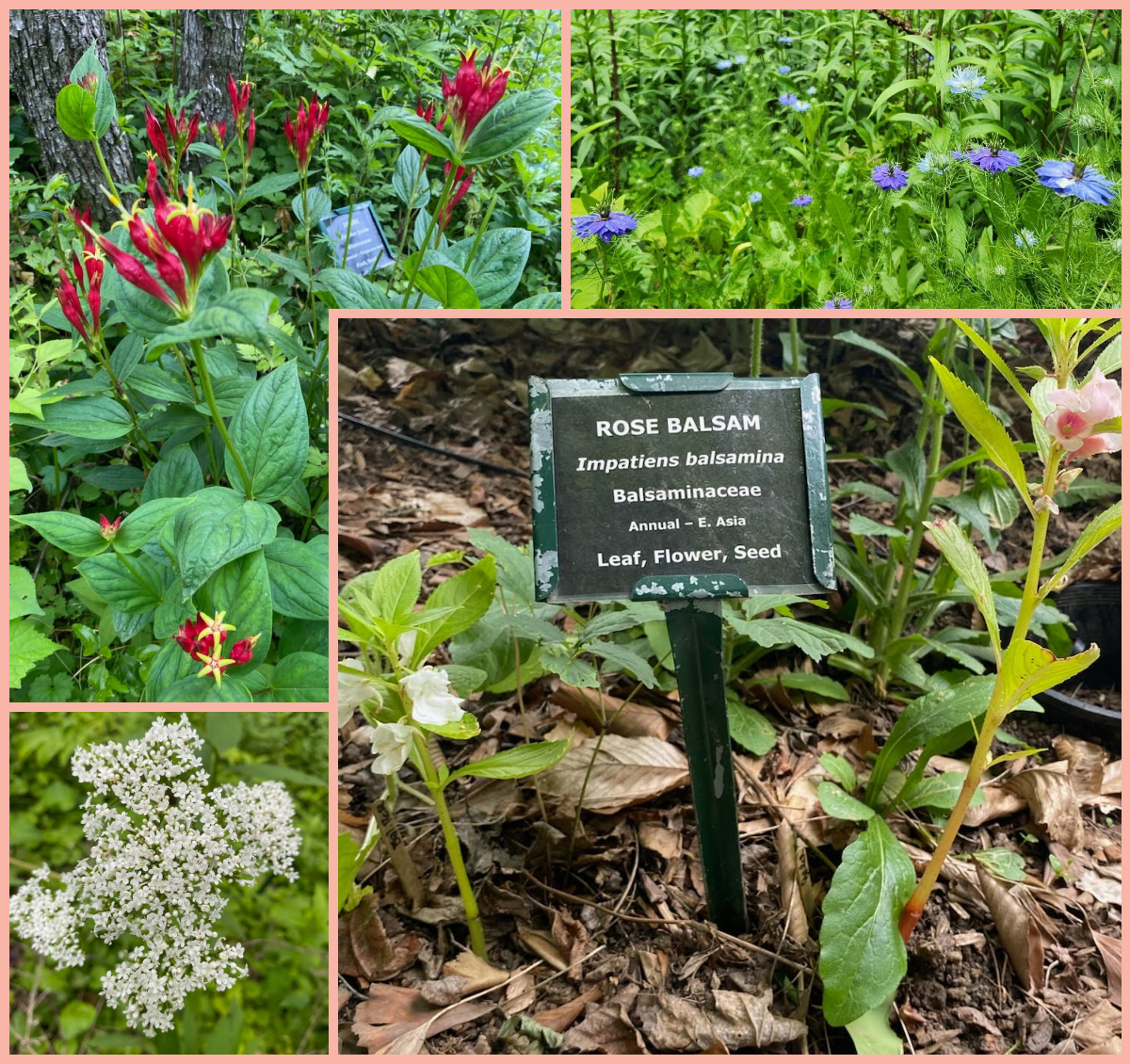
Some of May’s loveliest blooms included those pictured below, clockwise from bottom left: Rose Balsam (Impatiens balsamina), Valerian (Valeriana officinalis), Woodland Pinkroot (Spigelia marilandica), and Love-in-a-Mist (Nigella damascena).

Forecasts are showing sufficient chance of rain for this coming weekend that we want everyone to note that the Rain Date for our Children’s Day Extravaganza is Sunday, June 29. Please be aware that even if it doesn’t rain Sunday, sufficient precipitation before the event date can make our intended parking area unsuitable. We will update the Eventbrite listing and email all attendees by Saturday night if we have to postpone due to wet or muddy conditions. As always, our Public Events page offers more upcoming events at the GFG, and you can explore CEI’s core Programs and full event calendar on the website.

We look forward to sharing the Garden with you! -Veri for The Green Farmacy Garden team

All images by Annie-Sophie Simard except Terri Berkheimer’s birds and Tiger Beetle by Veri Tas.

Posted in environmental education, medicinal and edible plants | Tagged , , , , , , , , , , , , , , , , , , , , , , | Leave a comment

Verdant Views, Buzzing Blooms, & Seasonable Support

Dear friends of The Green Farmacy Garden — What a difference a month makes!

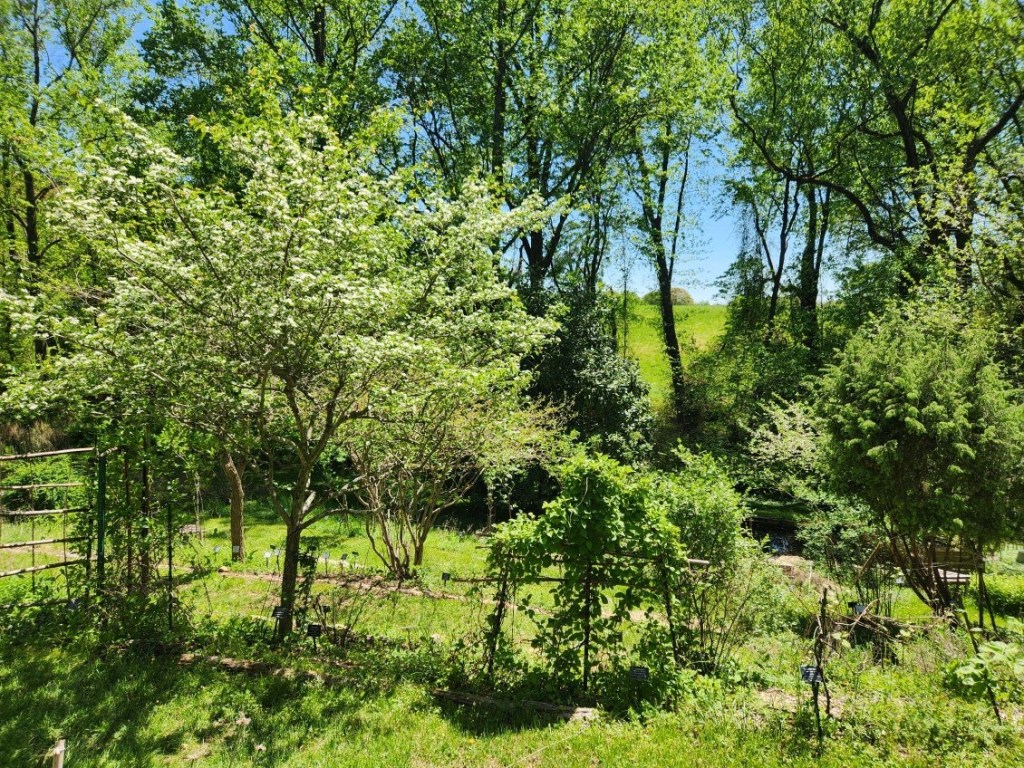
By the end of April, nearly everything is GREEN. Pictured above in the foreground, the Hawthorn (Cretaegus laevigata) tree blooms in the High Blood Pressure Plot in Terrace B above the trellised Schisandra (Schisandra chinensis), while you can see the white tips of the Carolina Silverbell (Halesia carolina) blooming over the pond in the background to the image mid-right, behind the evergreen Juniper (Juniperus virginiana) in Terrace C’s Cystitis plot.

— We interrupt this Garden update to bring you two time-sensitive Support Opportunities!! —

Please Support CEI’s Inclusion in the County Budget

Over the past six years, the Howard County government has been one of the strongest supporters of CEI’s work, including helping us purchase The Green Farmacy Garden. We are deeply grateful for their ongoing support. The County Executive’s proposed FY 2026 budget includes sustained operating support for CEI as well as a one-time grant for additional support, both of which are essential during this period of rapidly diminishing grant support opportunities. We are asking our community to sign on to a letter of support that we will send to the County Council as a part of our budget testimony on May 12th.  Please click here to sign the letter!

Want to support us in style? We’re running a t-shirt campaign through May 11 with new block print designs by local artist Nikita Yogaraj. There’s also a Freetown Farm design you can check out here!

We’re grateful for your support, and your collaboration in our efforts to cultivate communities where people and nature thrive together!

— And now back to the Garden! —

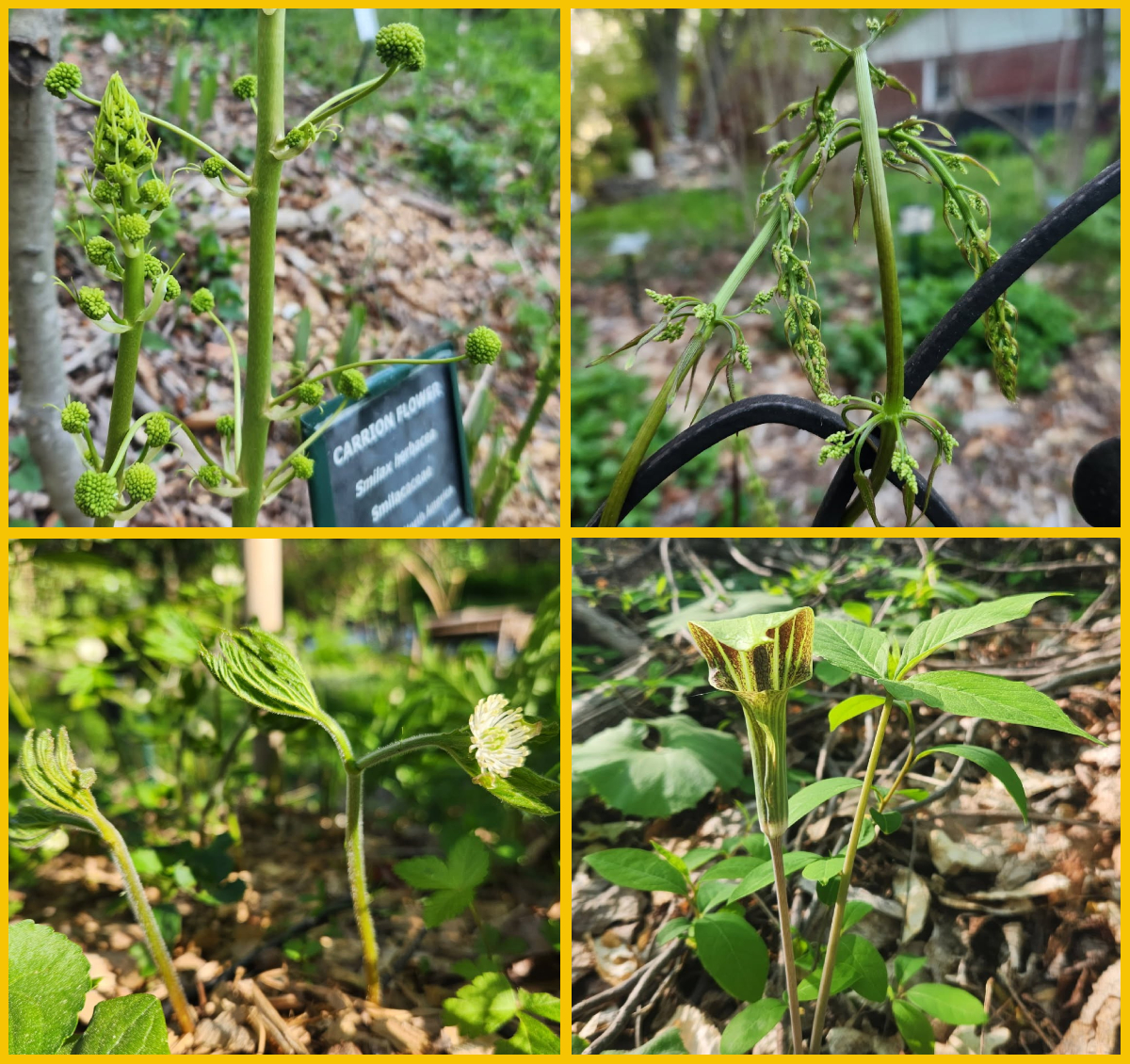
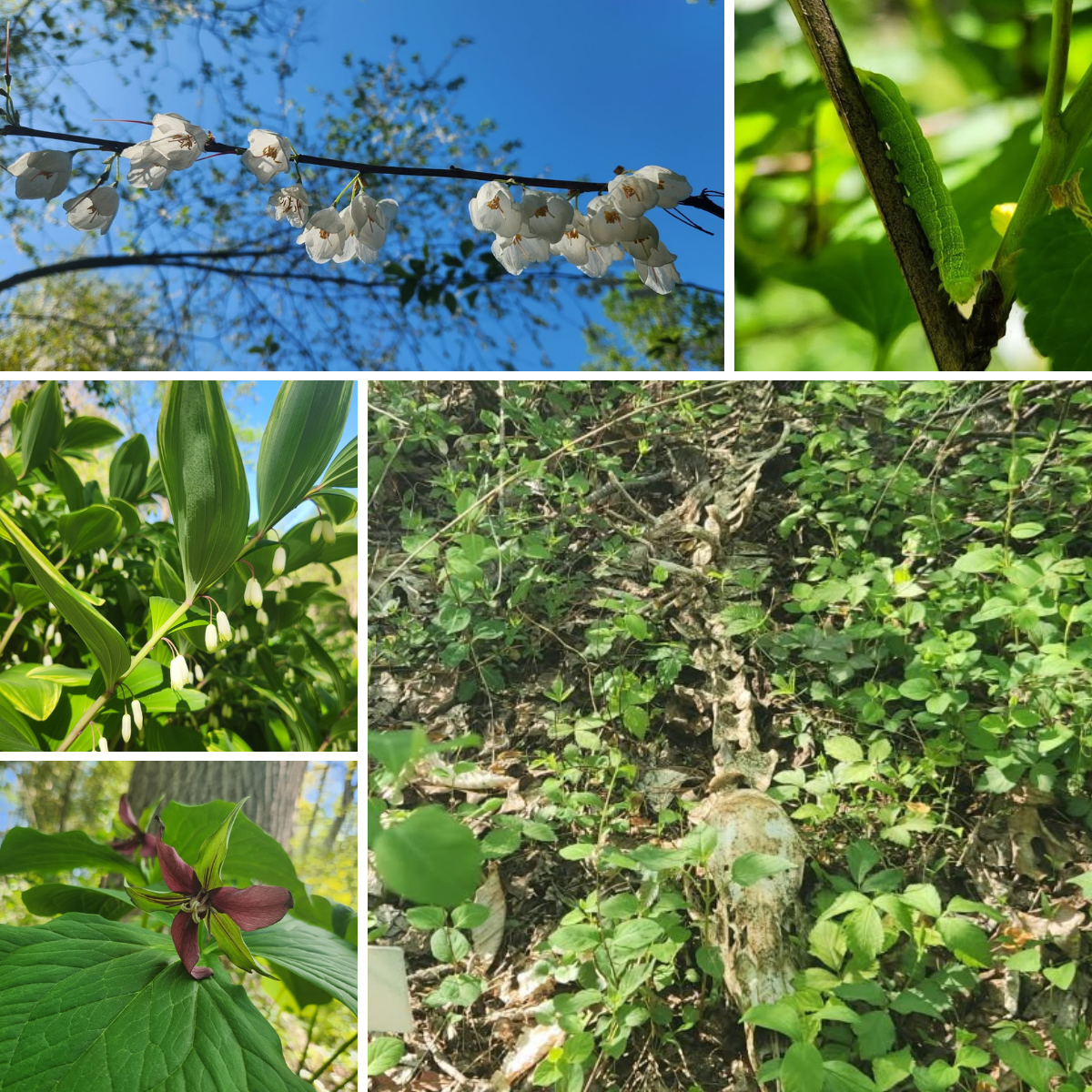
Throughout the month, perennial plants have been emerging, many blooming immediately, including the native Carrion Flower (Smilax herbacea, pictured here in bud), Wild Yam (Dioscorea villosa), and Goldenseal (Hydrastis canadensis) in the Garden and Jack-in-the-Pulpit (Arisaema triphyllum) in the woods, pictured below left to right, top to bottom:

The fauna are rousing too. We’ve had several close encounters with Red-Shouldered Hawks (Buteo lineatus), and a Bald Eagle (Haliaeetus leucocephalus) graced us with a recent visit, along with numerous migrating songbirds. Diverse pollinators have been busily working the Carolina Silverbell (Halesia carolina, top left below) and Solomon’s Seal (Polygonatum odoratum, middle left below), while inchworms and caterpillars like the one pictured below top right are showing up all over. This one feeding on our native Ninebark (Physocarpus opulifolius) may be a type of Spring Moth (Lomographa sp.), which is one of the several moths whose larvae it’s known to host. Also pictured below are (bottom right) the remains of a White-Tailed Deer (Odocoileus virginiana) who died outside the Garden last month and Red Trillium (Trillium erectum, bottom left).

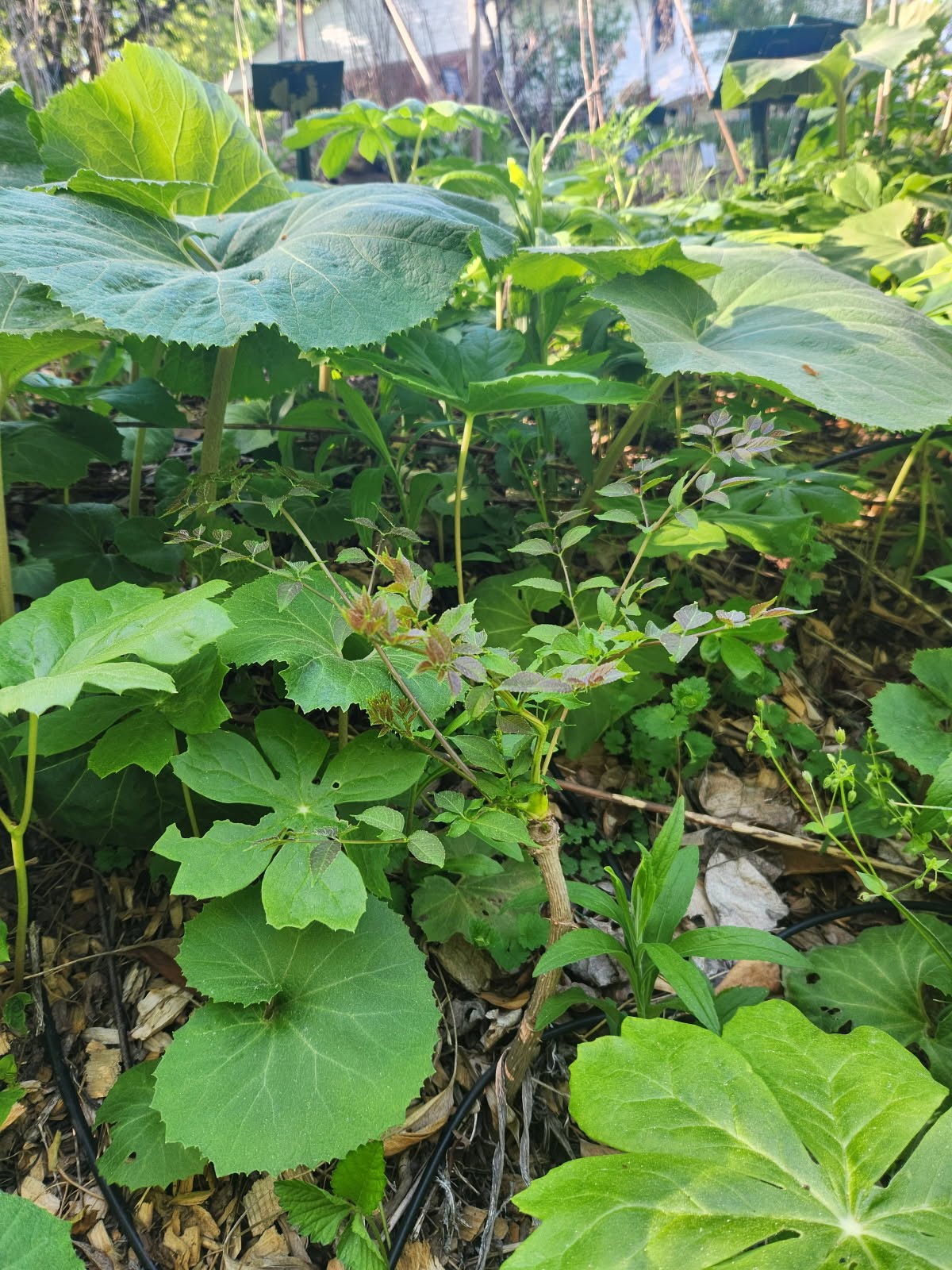
And because I’m ever-enamored of it, here’s the update on the Devil’s Walking Stick (Aralia spinosa): pleased to see the root sprouts (leaves with red tinge, pictured on the right below, at frame center) are leafing out and growing !! Eventually the dead limbs of the venerable trunk will fall or have to be removed, but for now it remains a stunning presence (below left).

May sees the big push to move the tropicals out into their seasonal spots in the terraces – join us for the Tropical Plant-Out on May 18 to pitch in and meet many of these special plants, and consider sticking around (or popping back after lunch in Maple Lawn) for May’s Foraging Walk. This month’s Herbal Medicine-Making workshop on Saturday focuses on medicinal applications of Wild Rose.

Looking ahead, we’re excited to host our Children’s Day Extravaganza on June 8 and hope you’ll bring your family to join us! As always, you can explore CEI’s core Programs and full event calendar on the website.

We look forward to sharing the Garden with you! -Veri for The Green Farmacy Garden team

All photos courtesy of Veri Tas. Banner image shows Halesia carolina blooms in April

Posted in environmental education, medicinal and edible plants | Tagged , , , , , , , , , , , , , , , , , , , , | Leave a comment

Getting into the Swing of Spring

Happy Spring, dear friends of The Green Farmacy Garden!

‘Tis the season.. to learn what your plant relatives look like when first emerging! I’m always emphasizing the importance of being able to recognize a plant in any stage of its life cycle, as part of my Foraging classes. Many of the plants highlighted below aren’t candidates for foraging, but the identification practices apply to all plants, and if you Are wanting to forage, it’s just as important to know what’s out there that can harm you as what can help you! Without being distracted by the other plants growing close to or in between (we’ve got Goutweed (Aegopodium podagraria), Ground Elder (Glechoma hederacea), and Disappointment Berry (Potentilla indica) and more visible in some of these shots), here are some of the plants popping up around the Garden & grounds. Spiraling in, clockwise from bottom left:

  • Veratrum viride, the toxic and stunningly gorgeous Corn-Lily, shoots emerging along the stream. Note the grooves running along the length of the leaf, indicating this plant’s parallel vein pattern, far less common in the plant world than your stereotypical netted venation system.
  • Symplocarpus foetida, Eastern Skunk Cabbage, looks pretty similar to the Corn-Lily at this emerging shoot stage, but note the absence of those (now-)vertical grooves. Skunk Cabbage doesn’t have parallel venation.
  • Our tropical Physic nut (Jatropha curcas) pushes out new leaves after a couple months in the sun room without leaves.
  • Young leaves of the (potentially) fatally toxic Colchicum autumnale, Autumn Crocus showing substantial evidence of herbivory! It keeps mystifying me when our local wildlife browse on deadly plants in the garden but don’t turn up dead – hopefully it’s small enough doses that they are unharmed.
  • Lacy early foliage of Queen Anne’s Lace, the wild Daucus carota, from which our common carrots were domesticated. The deadly Poison Hemlock, Conium maculatum, has similar foliage and can be mistaken for this plant.
  • Sweetgrass, Hierochloe odorata, the main character of Robin Wall Kimmerer’s opus of plant relating Braiding Sweetgrass. To align with the traditional ecological knowledge of many indigenous peoples with millenia of relating with this species, as well as the scientific research Kimmerer supervised which found “sweetgrass flourishes when it’s harvested and declines when it is not,” this patch needs to be harvested this year. We will move some to the agroecological demonstration wetland meadow we’re implementing this year, and will share more as appropriate for the Garden population with local Indigenous community members on request!
  • Borage, Borago officinalis, and other seedlings of herbs indicted in various Garden plots pop up in seed-starting trays, pictured here hardening off on the balcony.
  • Solstice Wort/ St. John’s Wort, Hypericum sp., shows a distinctive red coloration to the youngest leaves and around the edges of older leaves, which are small, ovoid, and relatively flat, and occur in pairs on either side of the stem.
  • Rattlesnake Master, Eryngium yuccifolium, is easy to distinguish from its namesake, Yucca, at this stage, because Yuccas are evergreen and the leaves of young plants are far more narrow relative to length. Even at this stage, the blue-green hue of the Rattlesnake Master’s leaves is notable, the Epicuticular wax that coats its leaves is visible, and the bristly teeth along the leaves’ margins are distinct.
  • Young Achillea millefolium, Yarrow, show the recognizable fernlike foliage, characterized by bipinnate (twice divided) or tripinnate (thrice-divided) leaves with an overall lanceolate (lance-like) shape.

Other plants are already (or still, in the case of Citrus) blooming. Below, spiraling in, clockwise from bottom left:

  • This Petasites Japonica, Giant Butterbur, flower is at its peak
  • Jaborundi, Pilocarpus jaborandi, a seasonal denizen of the Glaucoma plot, blooms in the sun room
  • Magnolia liliifera, Tulip Magnolia, just opening next to the house
  • Yellowroot, Xanthorhiza simplicissima, sports tiny buds at the same time its leaves burst out
  • The dainty woodland Twinleaf, Jeffersonia diphylla, also blooms as it breaks ground
  • Tussilago farfara, Coltsfoot, opens prolific dandelion-like sun-yellow flowers before producing any leaves
  • Citrus x sinensis, our new Orange tree, fills the basement studio with intoxicating sweetness from just a few blooms, at least double the size of the Lemon, Citrus x limon, flowers we’re used to
  • Petasites japonica, Giant Butterbur, buds in this stage are a common Japanese “mountain food” and spring tonic called Fukinoto
  • Mertensia virginica, Virginia Bluebells, prepare to open their heavenly blue flowers
  • Sanguinaria canadensis, Bloodroot, blooms above its ingle leaf preparing to unfurl

Our Public Events are on the up-swing in April: we’re hosting 2025’s first Community Day, in honor of Earth Day; and April’s Volunteer Day focuses on important Garden care. As always, you can explore CEI’s core Programs and full event calendar on the website.

Exciting CEI News of the hour:

We’re Hiring an Agroecology Program Manager! Justin leaves big shoes to fill, but we know the right new team member will find us and we’re excited for the collaborations to come!

We look forward to sharing the Garden with you! -Veri for The Green Farmacy Garden team

All photos courtesy of Veri Tas. Banner image shows Magnolia liliifera buds in March

Posted in environmental education, medicinal and edible plants | Tagged , , , , , , , , , , , , , , , , , , , , | Leave a comment

Signs of Life: 2025’s First Blooms and Events

Welcome to the 3rd month of 2025, dear friends of The Green Farmacy Garden! I hope you’ve been soaking up sunlight as abundant as we’ve enjoyed here recently, and managed to take cheer in plants around you preparing to Spring into their next growing season. Scroll down for tastes of the earliest signs of life here at the Garden, and visit our Public Events page for upcoming opportunities to see what’s growin’-on for yourself!

The Community Ecology Institute just completed our 2024 impact report, and we’re very proud of all we accomplished for and with our community last year! You’ll find The Green Farmacy Garden highlighted on page 16, and I invite you to look through the entire report and celebrate the whole of our collective impacts. Perhaps there’s a part of CEI’s work you’re not yet familiar with, that you and your loved ones can connect with in 2025? We know that our work to cultivate community where people and nature thrive together is more important than ever, and we’re grateful for the privilege of sharing another year with you!

Above, the first Hellebores (Helleborus orientalis) bloom dramatically (top) in late February, while Snowdrops (Galanthus nivalis) continue to riot (bottom).

Images from the woods below, clockwise from top left and right, respectively: purple and gold crocus (Crocus sp.); a honeybee (Apis mellifera) positively glows, covered in Snowdrop (Galanthus nivalis) pollen; Winter Aconite (Eranthis hyemalis).

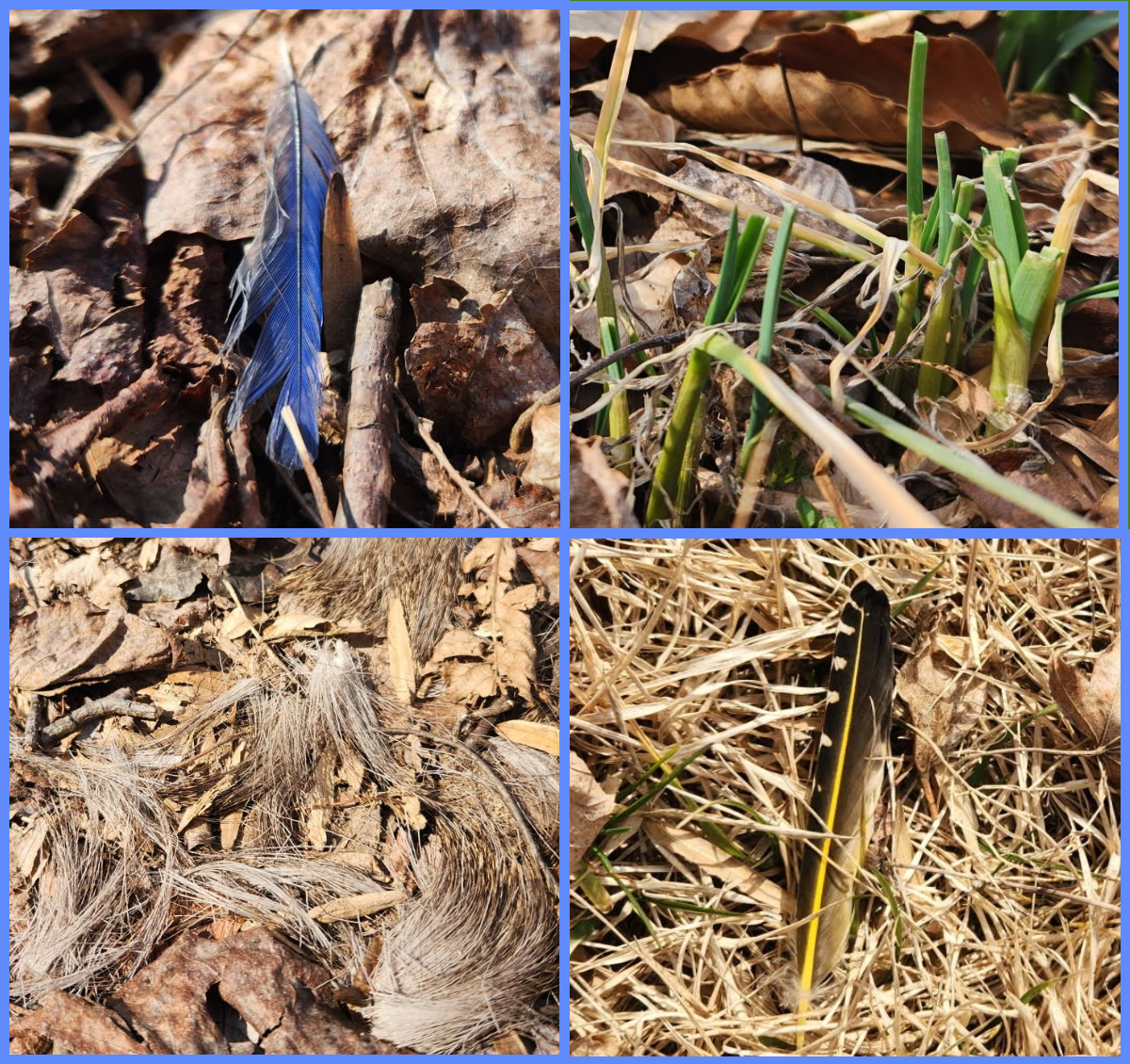
Animal signs abound in late February. Below, clockwise from top left: Eastern Bluebird (Sialia sialis) feather; chomped leaves of Snowdrop (Galanthus nivalis) in Terrace A; yellow-shafted Northern Flicker (Colaptes auratus) wing feather; White-Tailed Deer? (Odocoileus virginiana) hair strewn in a woodland path.

As always, you can explore CEI’s core Programs and full event calendar on the website.

Wishing you sunshine, connection, and cheer! -Veri for The Green Farmacy Garden team

All photos courtesy of Veri Tas.

Posted in environmental education, medicinal and edible plants | Tagged , , , , , , , , , , , , , , , | Leave a comment

Tending the Foundation

Happy mid to late winter (depending which groundhog you go by), dear Friends of The Green Farmacy Garden!

Appearances from the outside may imply little going on here at the Garden over the winter, but internally we’ve been securing the foundation for a nourishing growing season with our community: manifesting new programs and updating existing ones, strengthening relationships with collaborating organizations, and updating infrastructure to better serve our community – scroll down for an example of house renovations!

The snow in early January, less than 3 weeks after the Winter Solstice, offered a stunning, blanketed take on the familiar terrain. The long, dramatic shadows at midday evince the North pole’s maximal tilt away from the sun at this time of year:

With the support of a Maryland Legislative Bond Initiative, we’ve begun updating the house for use in support of our mission and experiential education programs. The intention for the basement renovations completed this winter is a more open concept, designed to optimize health-focused education on the property as well as ADA accessibility.

Here’s the transformation of our new Classroom, facing out toward the driveway and patio where we normally commence most of our tours and events, in September (top), November (left), December (right), and January (bottom):

And here facing in from the driveway entrance toward the studio door in the Classroom front, in September (top), November (left), December (right), and January (bottom):

We can’t wait to explore all the potential uses for this new classroom space, including workshops, presentations, screenings, and more, hosted by CEI and affiliates as well as community members renting the space!

Our 2025 season opens this weekend with Introduction to Herbal Medicine, with monthly Herbal Medicine-Making classes, Foraging Walks throughout the season, varied volunteer opportunities, and much more to follow! You can see our scheduled public events here, and register on Eventbrite. Families seeking communal outdoor learning experiences with others can still explore CFIN’s 2025 offerings, and the full CEI event calendar including Freetown Farm and elsewhere in the community is on the website.

My best, Veri

GFG snow and basement photos by CEI Operations Manager Jonathan McKiinney; banner image of dwarf orange ripening in the studio in January by Veri Tas.

Posted in environmental education, medicinal and edible plants | Tagged , , , , , , , , , , , , , , , | Leave a comment

Welcoming 2025

Welcome to 2025, dear friends of The Green Farmacy Garden!

We’re grateful to have shared a beautiful and productive 2024 season with you, wrapping the second year of GFG stewardship by the Community Ecology Institute last week! Thanks to grants from Chesapeake Bay Trust and Live Green Howard, we were able to add several free events to our public offerings, sharing diverse outdoor experiential education with hundreds of people and collaborating to make meaningful improvements to native biodiversity and stormwater management:

Most of CEI’s core programs hosted sessions onsite here at the GFG this year, with Green SEEDS interns, Roots and Wings homeschoolers, and participants of all ages in Community of Families in Nature all enjoying and contributing to the peaceful, nurturing vibe of this sanctuary. Several volunteer groups joined us to install water management strategies both in the Garden and around the property.

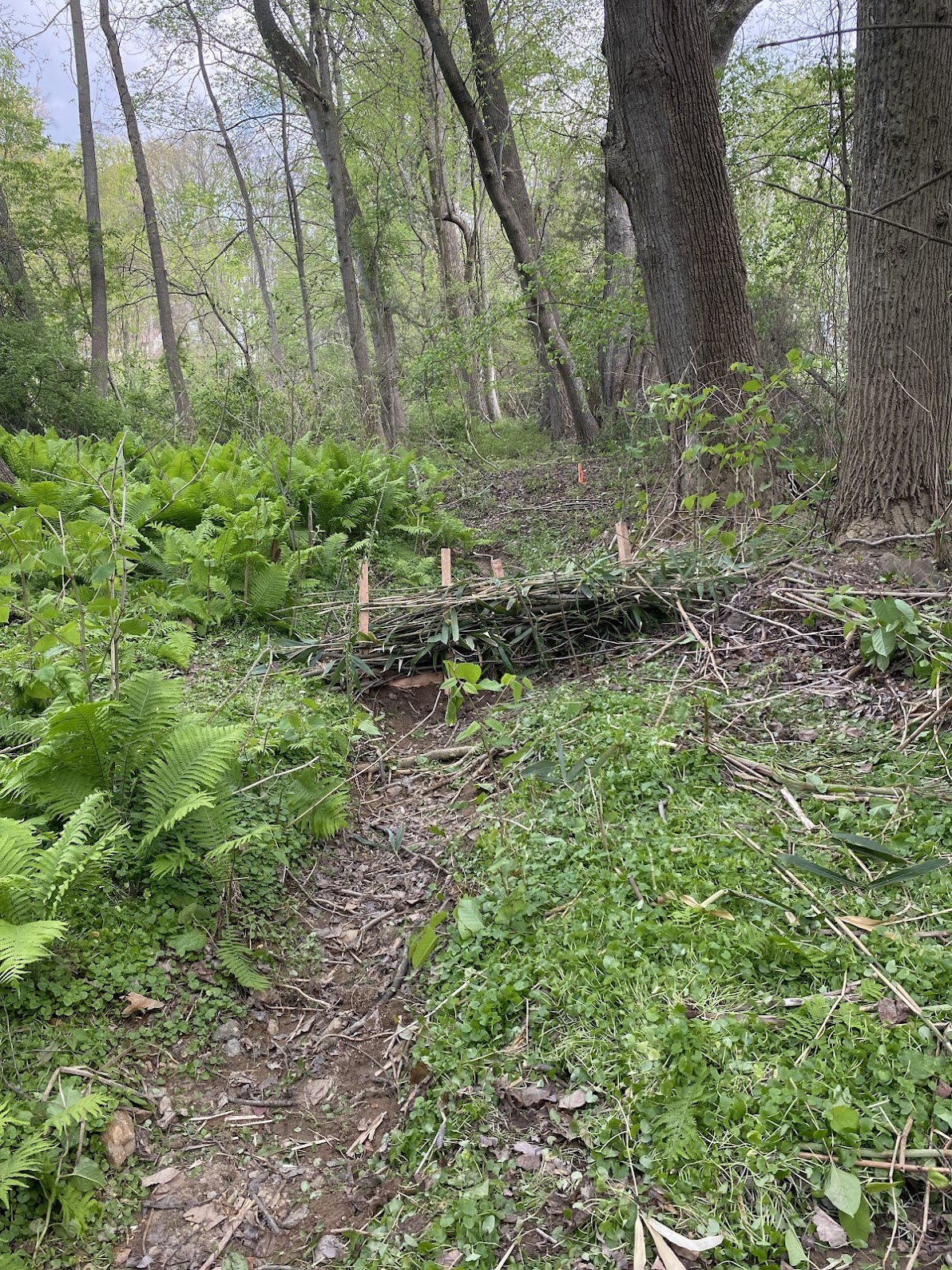
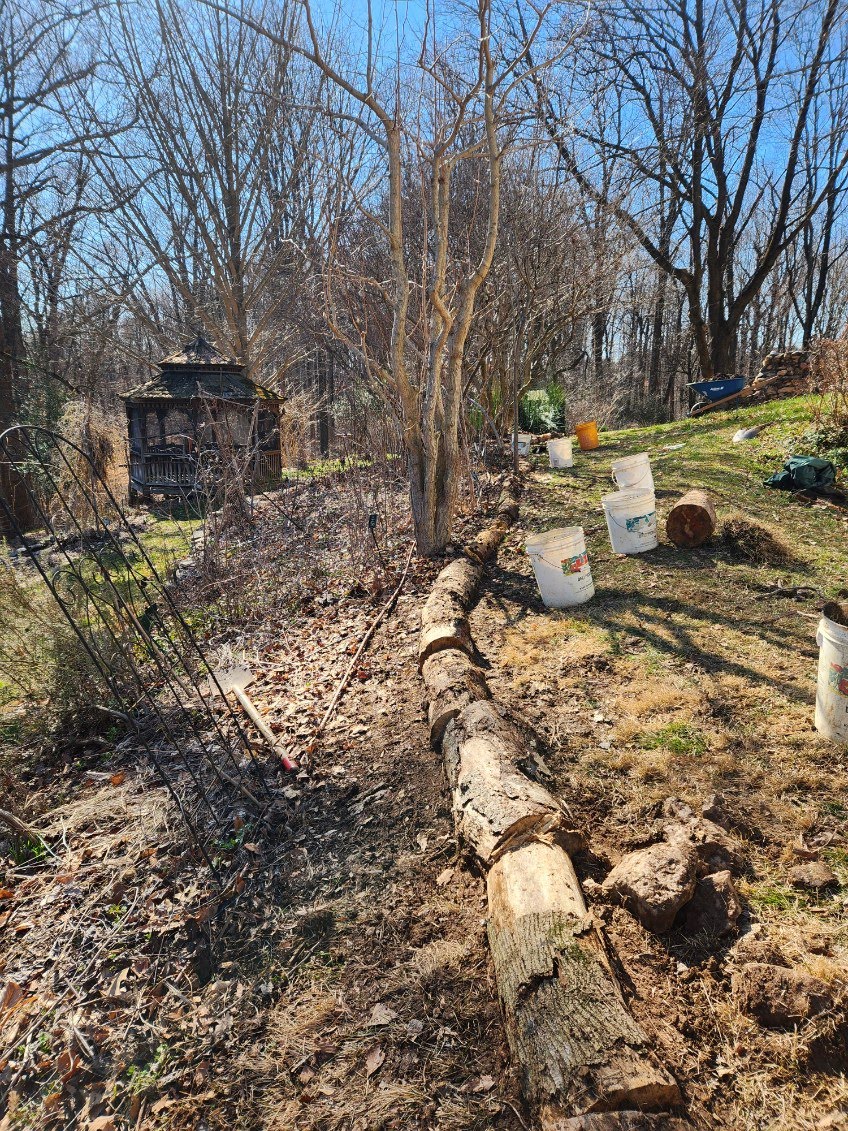
Pictured below, clockwise from top left: an experimental Beaver Dam Analog (BDA) constructed in an eroding water pathway leading to one of our streams, intended to reduce erosion by slowing water flow and catching sediment; Log Erosion Barriers (LEBs) installed along the sunny top edge of Terrace A for a similar purpose as well as soaking and infiltrating water into the garden bed; LEBs installed in Terrace C; and a team working to install LEBs along the top of Terrace B.

Interns in CEI’s Green SEEDS program and Girl Scout community helped transform the foundation planting at the house’s entrance to a Nourishing Garden showcasing the beauty and human and wildlife services afforded by several native edible and medicinal plants new to the site:

Near the end of 2024, we received notice that GFG founder Dr. Jim Duke’s phytochemical and ethnobotanical database (which can be downloaded here and searched online here) has been added to the Medicinal Plant Names Services Kew Science project of Royal Botanical Gardens Kew in the UK.

Kew is an incredible ally to global plants and plant enthusiasts, maintaining this resource as one of several Name and Synonymy resources available online helping people navigate the wide world of plant and fungal nomenclature and classification. To find out how Dr. Duke’s database is being used, I first searched the MPNS for a beloved species of which we have several specimens onsite, Afromomum corrorima, but no entries for this plant in the MPNS cited Jim’s database. I confirmed that name doesn’t appear in the Jim’s phytochemical database itself online, which perhaps indicates that Jim learned about it after he stopped editing the USDA database, or perhaps that there weren’t any published studies about it that he’d processed by that time.

Next I tried “Galium odoratum,” another favorite that GFG staff have been working with more intensively this past year (which I misspelled in my search, but the database recognized what I wanted anyway). Below (top) is the interface showing the “non-scientific name” “kokulu betumotu,” a name citing that doesn’t appear in any other source included in all of MPNS.. which also includes databases such as “Medicinal Plants Sold at Traditional Markets in Southern Ecuador” and 47 databases from Pakistan alone.

I went to Jim’s database (below, bottom) to see if I could learn more about that name, especially piqued when my Google search turned up no hits besides the Phytochem database for that search term. Sadly, it includes no additional information about the name — of greatest interest to me: Who uses that name for the plant, or where did Jim find it? But whoever it is that uses that name will now be able to find it in MPNS, thanks to this inclusion, and learn that most information about that plant in the scientific community is to be found under the name “Galium odoratum”! Very cool!

Like the deciduous trees outside, appearing dormant from the outside but investing out of sight in rooted infrastructure to support future growth and thrival, the GFG team is spending these winter months preparing for the coming year: exploring new programs and offerings, seeking funds for an expanded greenhouse to transform care and access of our tropical species, and performing both digital and 3D inventory hygiene to support efficient processes as we share the changes of 2024 and growth of 2025 with you! We won’t be hosting any public events at GFG this January, but look to work and learn with us again in early spring months. If you have eligible youth in your life, you can share the Green SEEDS Winter session application with them, to participate in the Feb-March cohort, and it’s a perfect time for families seeking communal outdoor learning experiences with others to explore CFIN’s 2025 offerings. The full CEI event calendar is available on the website

We’re grateful to count you among our community, and look forward to sharing the Garden with you in the coming months!

My best, Veri

[late November] Garter snake pic by CEI Board President Jean Silver-Isenstadt; Nourishing Garden photos by the Program’s Manager, Loni Cohen; kids in Walnut tree and families eco-printing by Garden friend and educator Julie Biedrzycki; and all other photos the creative works of Veri Tas and GFG staff Annie-Sophie Simard and Matthew Jacobsen.

Edited 2/25/2025 to remove accidental remnant from previous post.

Posted in environmental education, medicinal and edible plants | Tagged , , , , , , , , , , , , , , , , , , , , | 2 Comments

Closing the Season in Gratitude and Giving

Happy December, Dear friends of The Green Farmacy Garden!

We’ve been enjoying the warmth & beauty of the 2024 growing season’s last embers — please enjoy photos below if you couldn’t join us in person! We hope you’re finding plenty of the same to cherish and be grateful for as the cold moves in, and we are grateful to count you among our community!

This month marks the end of the Garden’s second year in the care of the Community Ecology Institute (CEI). CEI is a Howard County non-profit whose mission is to cultivate communities where people and nature thrive together, which continues to strive to meet the community’s request of carrying on Jim and Peggy’s legacy at their former home by working with local governments, integrating ongoing CEI programs and continuing to host community events at the Garden, and applying for Grants. You can access CEI’s 2023 Annual Report here.

We’re hoping the property will soon be rezoned to allow more diverse offerings and support sustainable operations. This year, we’re aiming at a modest $5,000 community funding goal for GFG operations, and hope you’ll think of us this Giving Tuesday! You can make a tax deductible donation here to directly support care of the Garden and grounds.

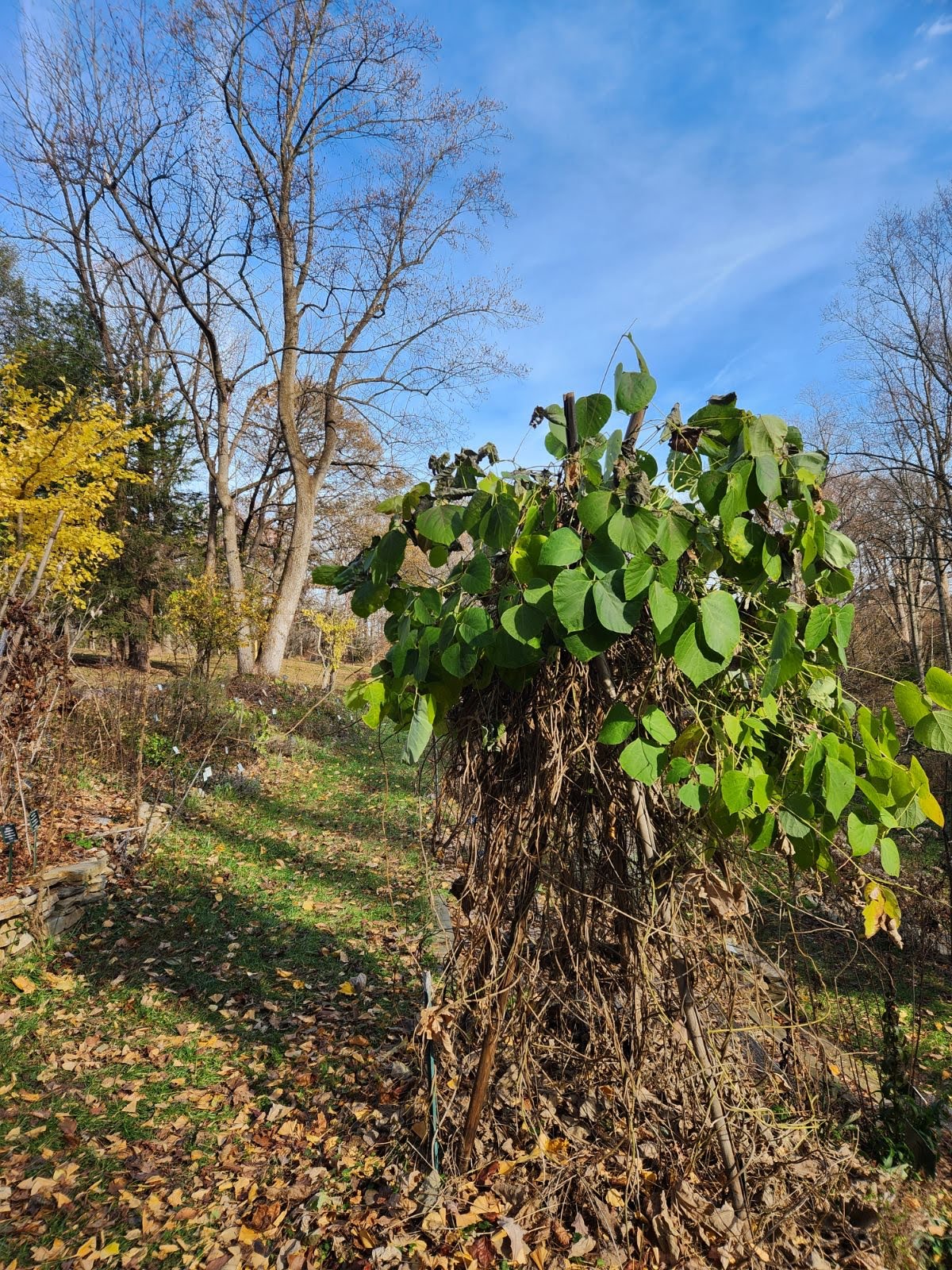
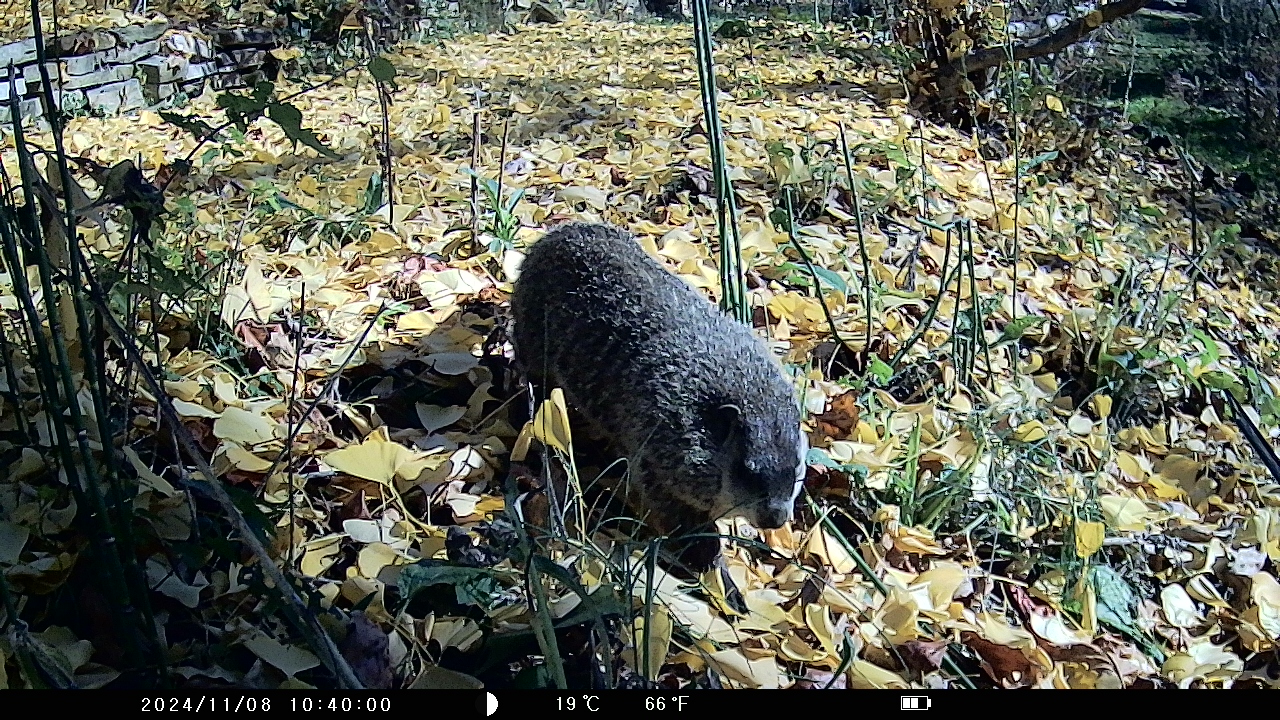
Above, a small Ginkgo (Ginkgo biloba) retains golden yellow leaves in late November, while a towering Tulip tree (Liriodendron tulipifera) has dropped them all, and Kudzu (Pueraria lobata), foreground, is among the last of the season to fade. Below, a groundhog (Marmota monax) nearly ready to hibernate passes under the Yaupon holly (Ilex vomitoria, not pictured) in Terrace C.

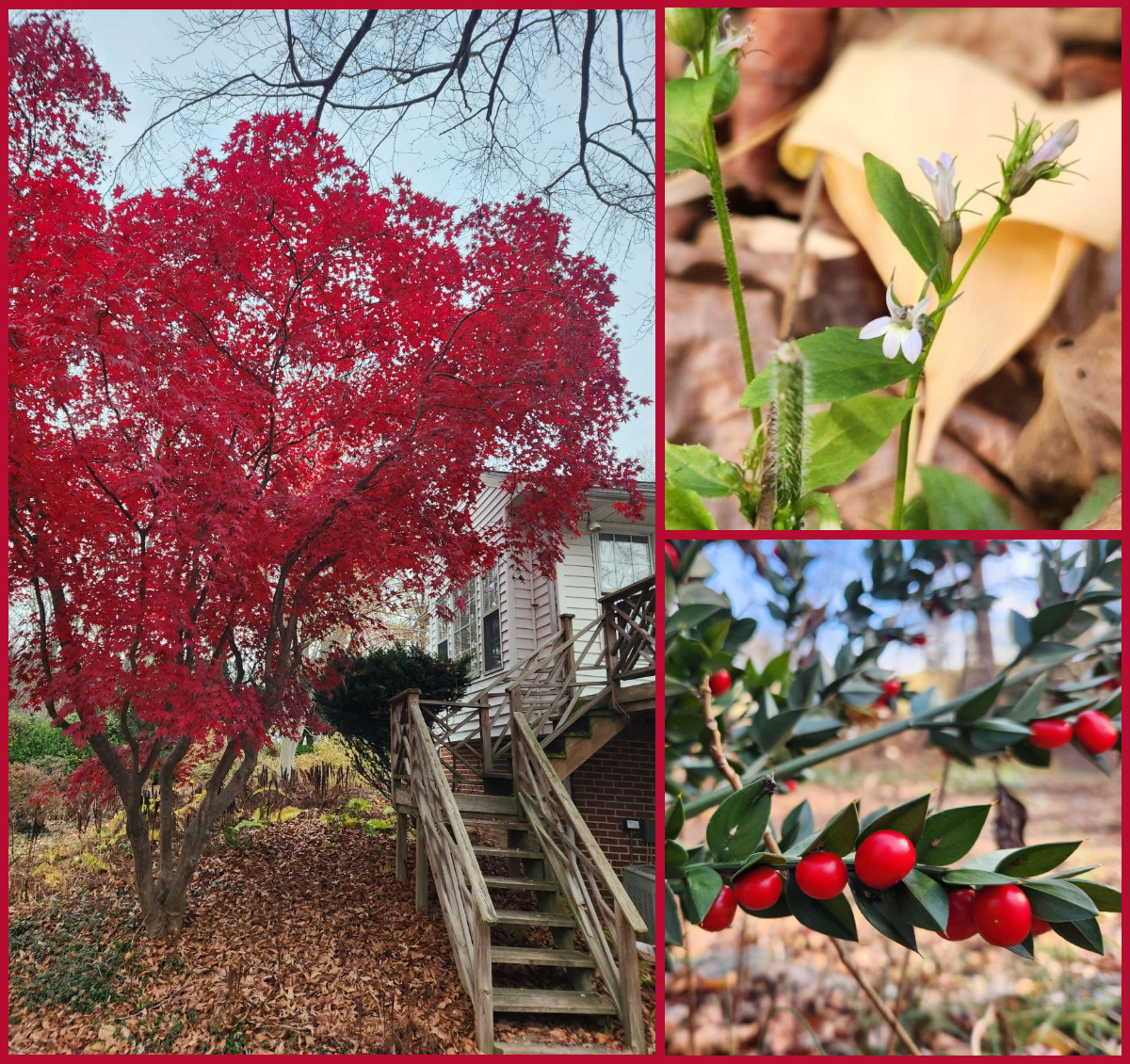
Below, clockwise from left: Japanese maple (Acer palmatum) aflame behind the house; self-seeded Lobelia (Lobelia inflata) blooming in mid-November; Butcher’s Broom (Ruscus aculeatus) berries fully ripe.

Many volunteers have helped make big changes onsite this month, including Scout teams fixing up the bridges in the woods (below, top left), building a couple benches around the property (including below, top right), and helping transition the plantings around the front door to a Nourishing Garden (below, bottom) with native edible and medicinal plants including Blueberries (Vaccinium sp.), Strawberries (Fragaria sp.), and Wintergreen (Gaultheria procumbens). Other individual and group volunteers have also helped plant lots of native trees and perennials, and erect a protective bamboo guard (below, top right) around the pond overflow garden installed earlier this season.

new Nourishing Garden at the front door features blueberries, strawberries, wintergreen, and other edible and medicinal native plants

Volunteers planted native willow trees (below, left column) and we enjoyed perfect weather for our Autumn Community Day (below, right column).

Here’s another sampler of wildlife neighbors enjoying the grounds. Now I know why wilderness trainers teach that there’s a mammal hair to be found on every square foot of earth out there, and have sat students down to look for it. I’ve never found one yet, but after seeing how many animals have crossed the small areas covered by these cameras in a few weeks, I might give it another shot!

CEI, including The Green Farmacy Garden, will be closed to the public spanning the transition of the year, 12/22/2024-1/5/2/25, to afford our teams a time of rest and reflection. We hope to see you in the next few weeks, and also in the new year! The full CEI event calendar is available on the website, and you can find December’s public event offerings at The Green Farmacy Garden here.

My best, Veri

Photo of kids in the woods on Community Day by Garden friend and educator Julie Biedrzycki, all others the creative works of Veri Tas.

Posted in environmental education, medicinal and edible plants | Tagged , , , , , , , , , , , , , , , , , , , , | Leave a comment

Centering Connection

How ’bout that sunshine, dear friends of The Green Farmacy Garden?!
Please enjoy this snapshot of the Garden’s glorious golden Ginkgo leaf carpet this afternoon.

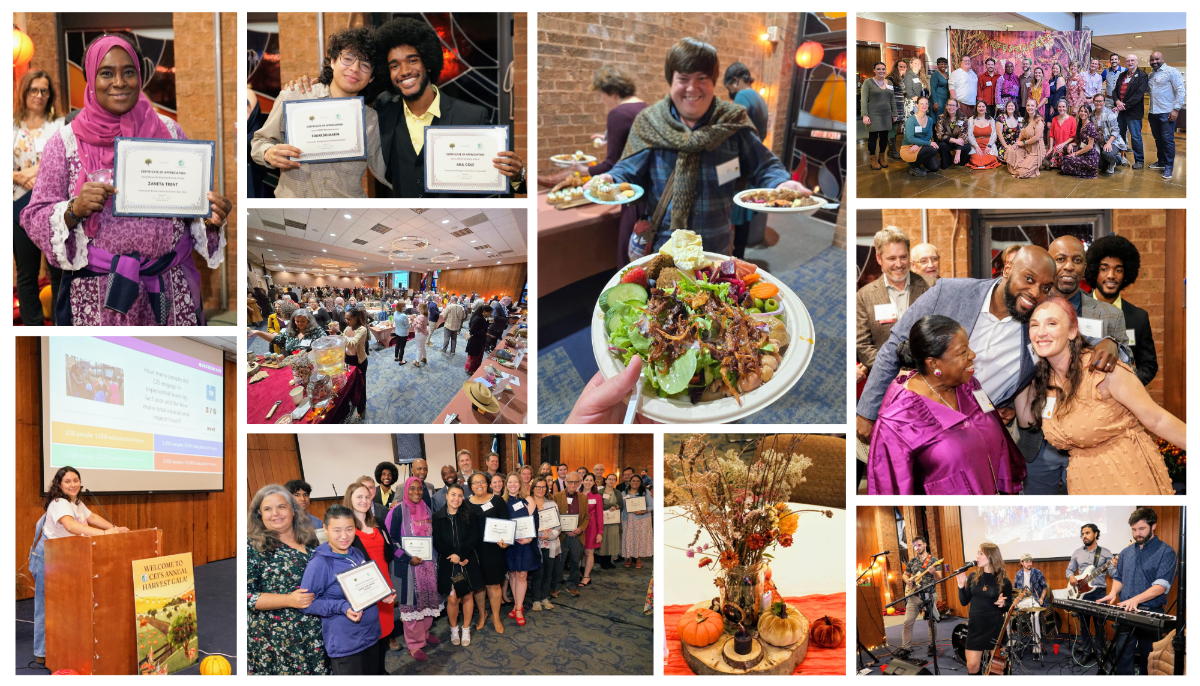
We want to thank all who joined us for our Annual Harvest Gala and made the night a smashing success in terms of building community, having a blast, and supporting our work & mission!

We’re excited to share the first caps from our wildlife cams! They’ve captured so many different animals already, frequenting just two spots onsite. Squirrels, deer, groundhogs and a possum; turkeys, fox, raccoon and a heron stalking the pond! We’ll certainly be working to refine our technique and switch up the scenery across the seasons. Check out these video clips of some of these friends enjoying the pond and Garden!
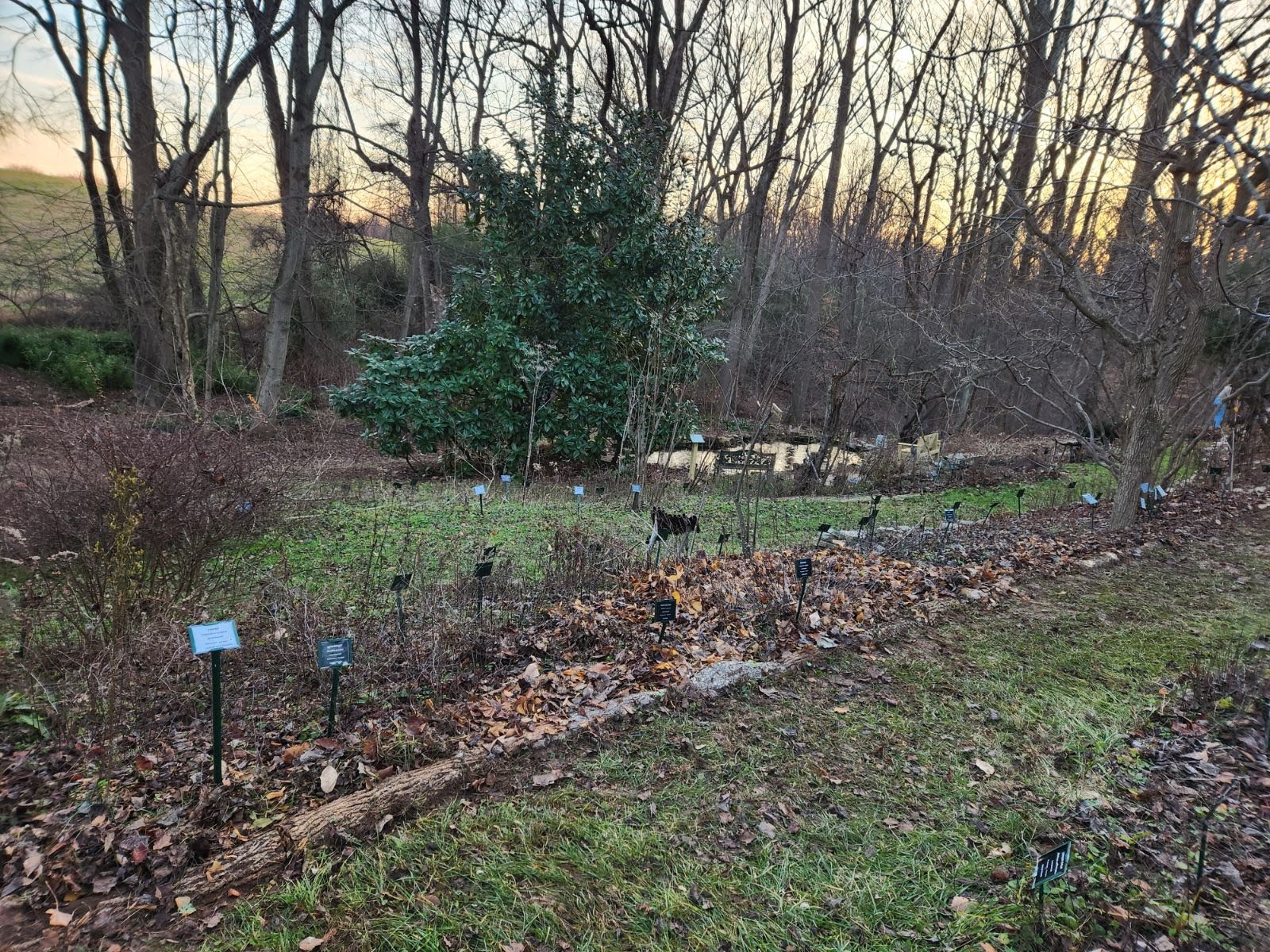
Thanks to volunteer support last month, all the tropicals have all been tucked into their winter homes in the house and greenhouse; we’ve installed a rain garden to help infiltrate water overflow from the pond; and many perennial natives have been planted in the woods in areas cleared of non-native plants earlier this season.

We’re looking forward to sharing all the year’s progress toward responsible water stewardship on the site at our Autumn Community Day, and there’s even more to come! Join us to plant native trees and perennials in the coming weeks. The full CEI event calendar is available on the website, and you can find November’s public event offerings at The Green Farmacy Garden here.

My best, Veri

Ginkgo carpet image by Annie-Sophie Simard.

Posted in environmental education, medicinal and edible plants | Tagged , , , , , , , , , , , , , , , , , , , | Leave a comment