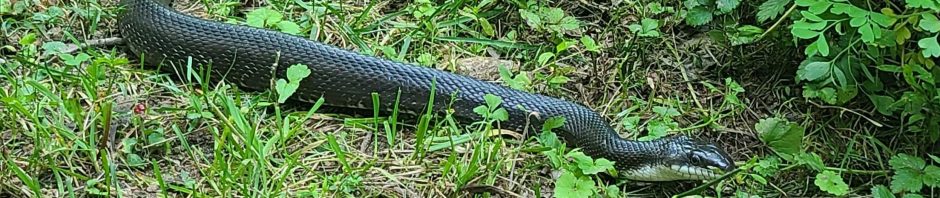
Welcome to summer, dear friends of The Green Farmacy Garden!
For us, it’s brought a marked increase in temperatures, but so far the rains are keeping up.. sometimes a bit excessively. It’s posed challenges and inconveniences for both plant care and event hosting, but has largely caught up our part of Maryland from last year’s drought — and the plants, and fungi, and I, are grateful.
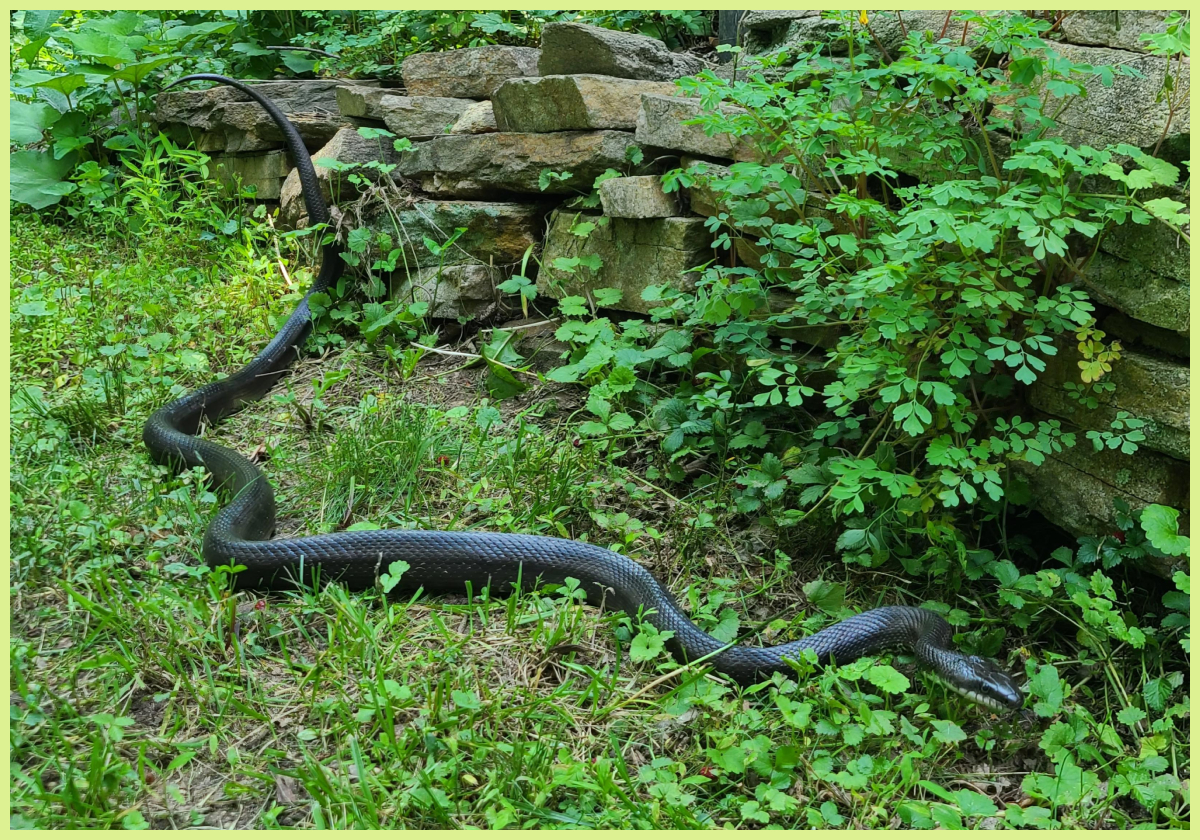
This impressive friend (above) made their way through the Garden in early June, with little concern or pause for the 3 of us working in their path that afternoon. The Eastern Ratsnake (Pantherophis allegheniensis) frequently reaches the 5’+ length of this specimen, and may be tied with Ring-necks (Diadophis punctatus) as the snake we see most frequently on the premises. Northern Water Snakes (Nerodia sipedon) make a less frequent appearance.

Some stunners from the Garden this month include, pictured above, clockwise from top right: new leaves of Hardy Banana (Musa acuminata ‘Novak’) start out tightly rolled; Scarlet Runner Bean (Phaseolus coccineus); Plumeria (Plumeria sp.), Bee Balm (Monarda didyma) in bloom.
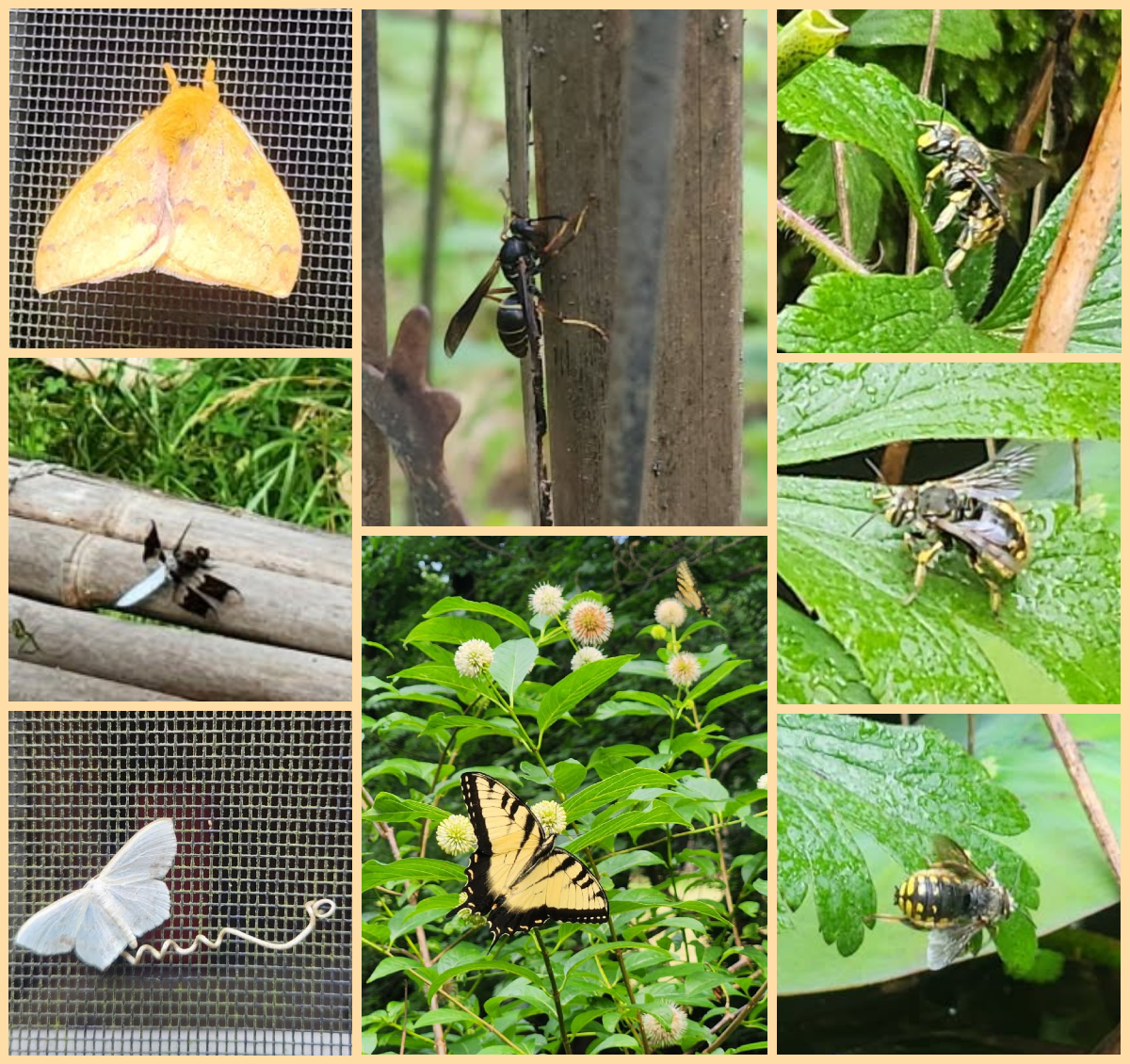
At first I thought the little critter pictured 3 times down the right side below was a wasp, but using my ID process, it seems they’re actually a Wool-Carder Bee (Anthidium manicatum), a species of which I was previously unaware. Following leads from a Google reverse image search through with exploration of Maryland Biodiversity Project and Insect Identification‘s photo gallery, I posted my eventual guess to iNaturalist and – for this specimen only! – another user confirmed the ID very quickly! The rest of my observations are still waiting for others to weigh in. iNat and Maryland DNR Wildlife‘s excellent photographic guides are among the other top resources I consult to try confirm identification guesses. If you know of others, please share them and I’ll boost them here to other interested parties too!
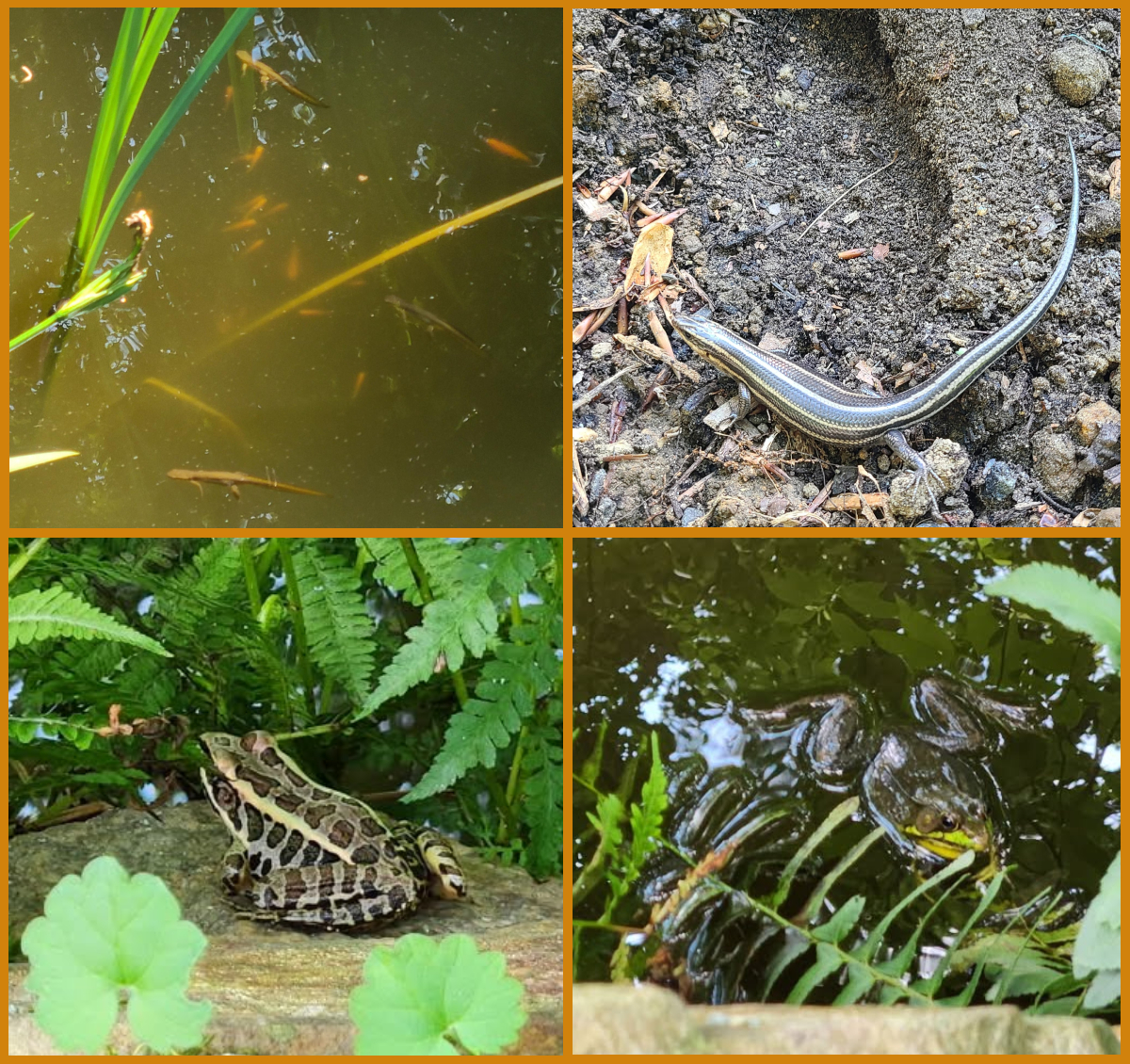
Based on such internet research, my current best guesses for the critters pictured above, clockwise from top left are: several Eastern Newts (Notophthalmus viridescens) float in the pond, catching some sun amidst the fish; a Common 5-Lined Skink (Plestiodon fasciatus) enjoys the Garden; a Pickerel Frog (Lithobates palustris) chills by the pond; and a Green Frog (Lithobates clamitans) floats in the sun along the pond edge.
And the insects pictured below, clockwise from bottom left and skipping the right column of [presumed] Wool-Carder Bee, may be: Snowy Geometer Moth (Eugonobapta nivosaria); Common Whitetail (Plathemis lydia) dragonfly; Io moth (Automeris io); this Paper Wasp (Polistes sp.) drew my attention by chewing on the bamboo stake; and Eastern Tiger Swallowtail (Papilio glaucus) nectars on Buttonbush (Cephalanthus occidentalis).
It’s humbling and gratifying learning about the other beings the diverse plants of the Garden and grounds support!
Families and friends who joined us for our second annual Children’s Day celebration collaborated to harvest vermicompost and restock the bin, ventured on Scavenger Hunts and a StoryWalk through the Garden and around the grounds, made eco-prints on cloth by pounding plant parts with a mallet, met medicinal plants on a Garden tour, created and exchanged freeform artwork, and wove new community connections (some snapshots below). We’re so happy to be sharing the magic of this site with more young ones!

As always, our Public Events page offers more upcoming events at the GFG, and you can explore CEI’s core Programs and full event calendar on the website. We look forward to sharing the Garden with you! -Veri for The Green Farmacy Garden team
All images by Veri Tas except Eastern Ratsnake , Common 5-Lined Skink, and Eastern Newts by Erik van den Valentyn.


