
January 2, 2025 6:30 am
Welcome to 2025, dear friends of The Green Farmacy Garden!
We’re grateful to have shared a beautiful and productive 2024 season with you, wrapping the second year of GFG stewardship by the Community Ecology Institute last week! Thanks to grants from Chesapeake Bay Trust and Live Green Howard, we were able to add several free events to our public offerings, sharing diverse outdoor experiential education with hundreds of people and collaborating to make meaningful improvements to native biodiversity and stormwater management:
Most of CEI’s core programs hosted sessions onsite here at the GFG this year, with Green SEEDS interns, Roots and Wings homeschoolers, and participants of all ages in Community of Families in Nature all enjoying and contributing to the peaceful, nurturing vibe of this sanctuary. Several volunteer groups joined us to install water management strategies both in the Garden and around the property.
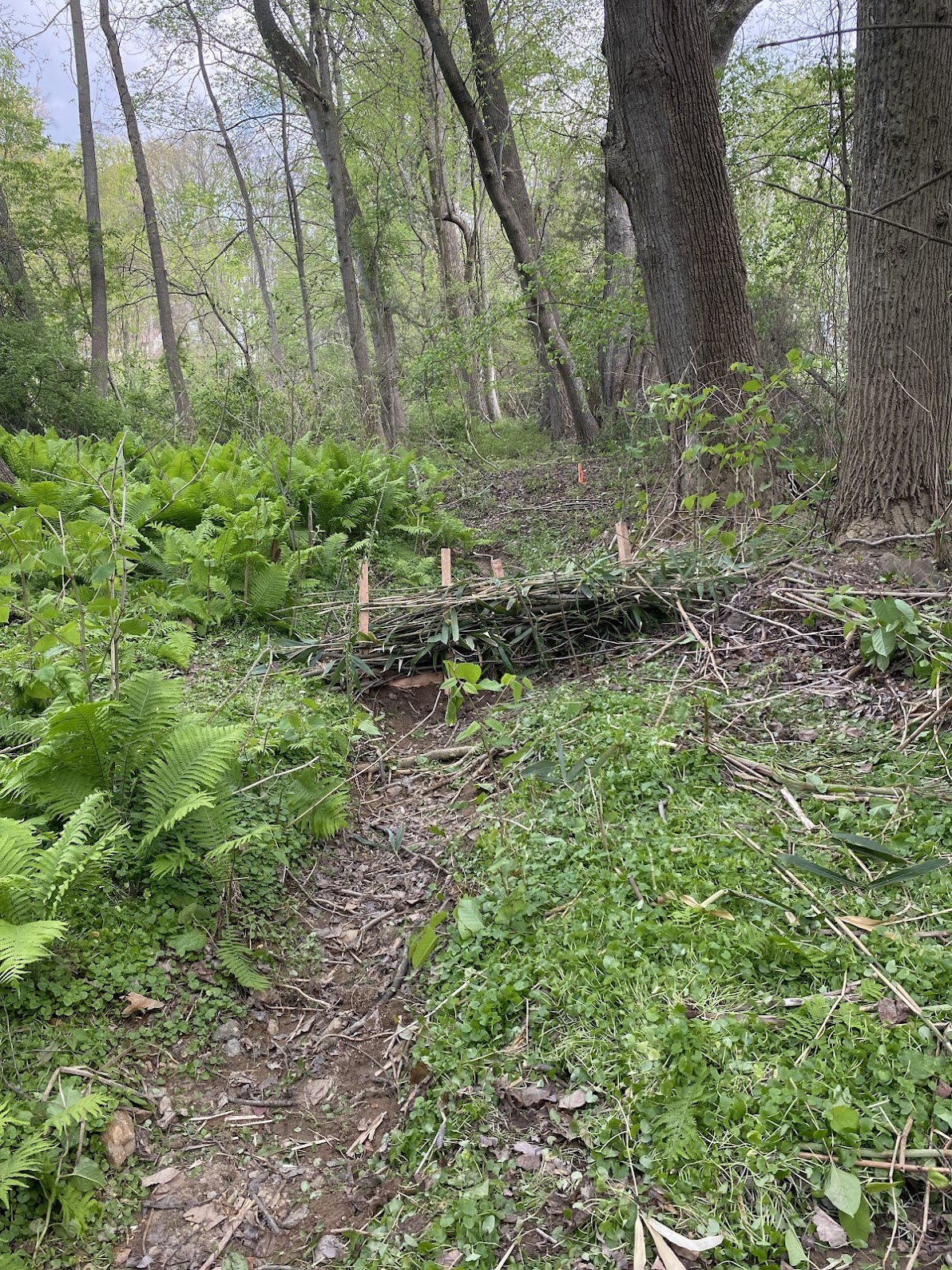
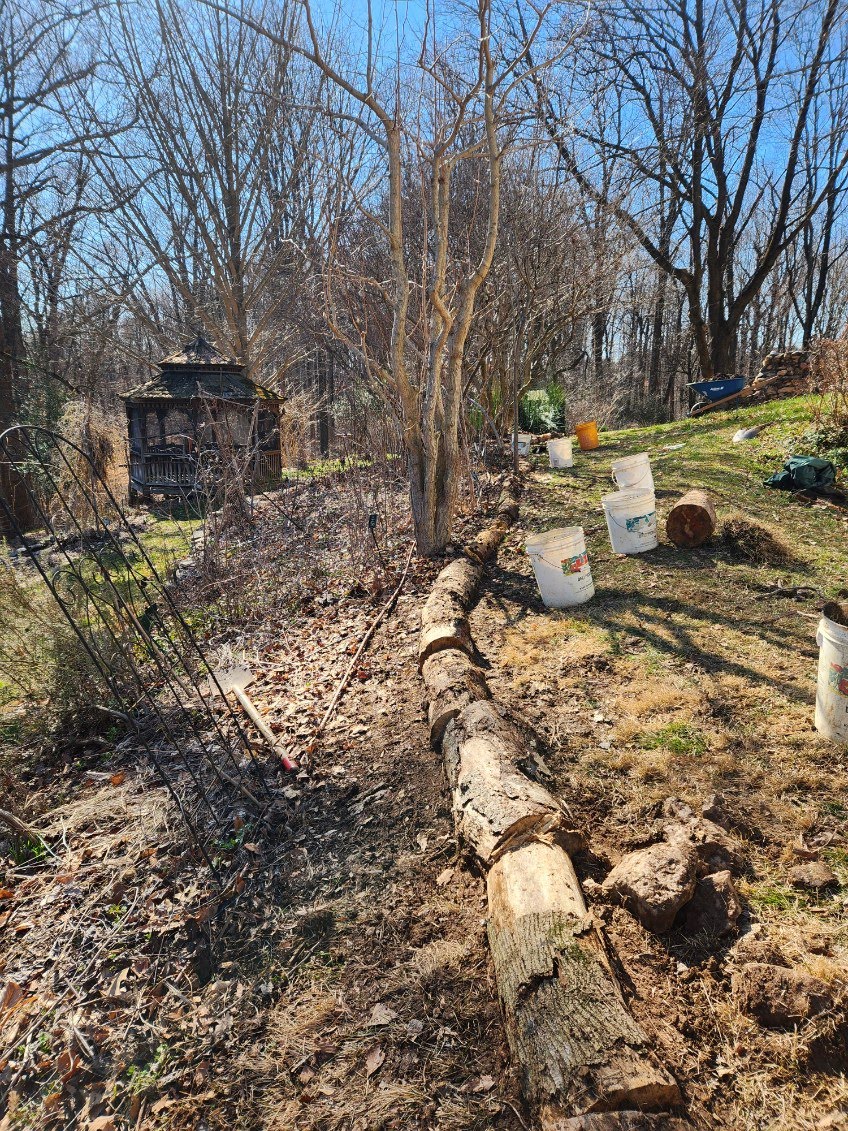
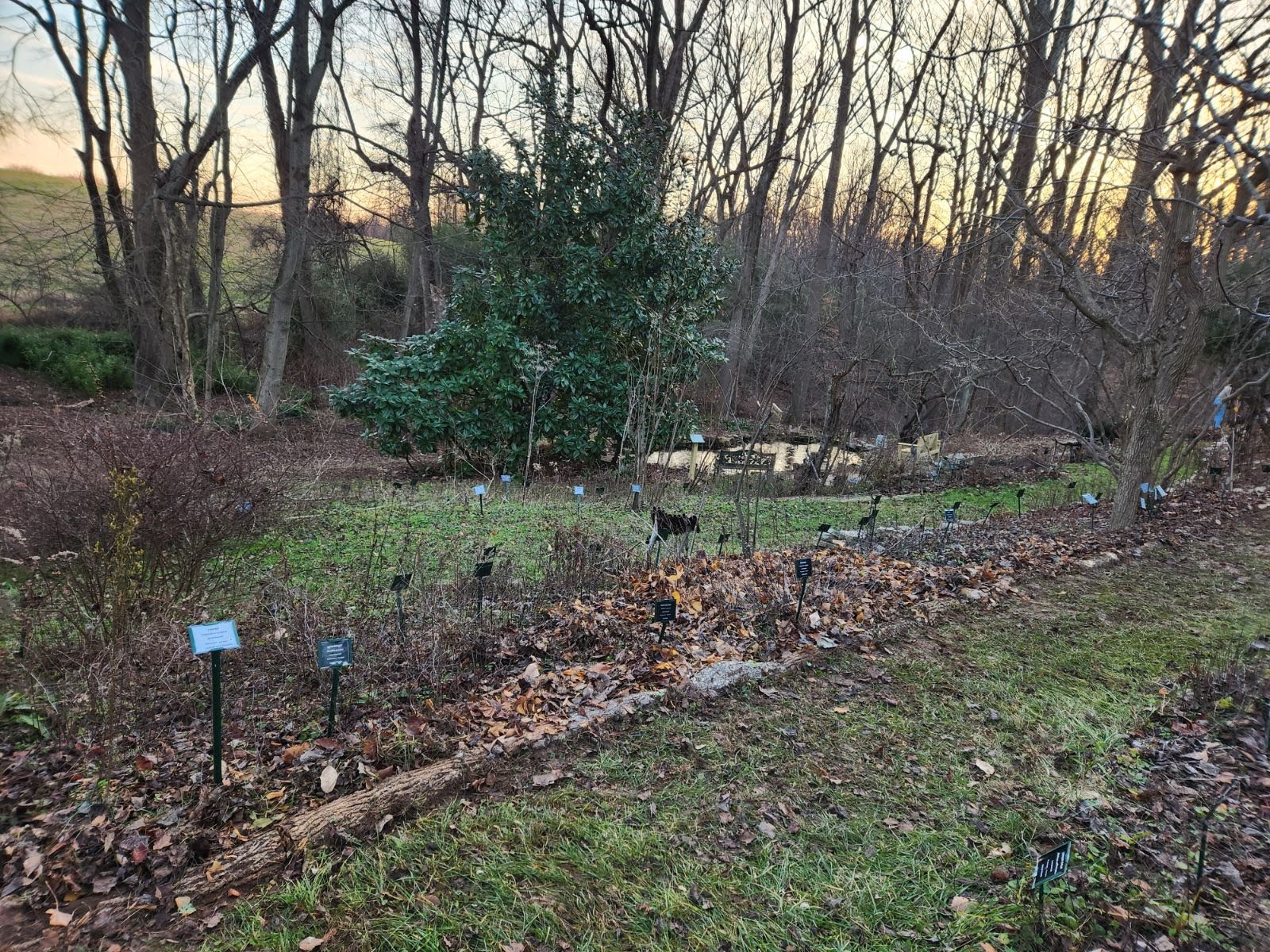
Pictured below, clockwise from top left: an experimental Beaver Dam Analog (BDA) constructed in an eroding water pathway leading to one of our streams, intended to reduce erosion by slowing water flow and catching sediment; Log Erosion Barriers (LEBs) installed along the sunny top edge of Terrace A for a similar purpose as well as soaking and infiltrating water into the garden bed; LEBs installed in Terrace C; and a team working to install LEBs along the top of Terrace B.

Interns in CEI’s Green SEEDS program and Girl Scout community helped transform the foundation planting at the house’s entrance to a Nourishing Garden showcasing the beauty and human and wildlife services afforded by several native edible and medicinal plants new to the site:

Near the end of 2024, we received notice that GFG founder Dr. Jim Duke’s phytochemical and ethnobotanical database (which can be downloaded here and searched online here) has been added to the Medicinal Plant Names Services Kew Science project of Royal Botanical Gardens Kew in the UK.
Kew is an incredible ally to global plants and plant enthusiasts, maintaining this resource as one of several Name and Synonymy resources available online helping people navigate the wide world of plant and fungal nomenclature and classification. To find out how Dr. Duke’s database is being used, I first searched the MPNS for a beloved species of which we have several specimens onsite, Afromomum corrorima, but no entries for this plant in the MPNS cited Jim’s database. I confirmed that name doesn’t appear in the Jim’s phytochemical database itself online, which perhaps indicates that Jim learned about it after he stopped editing the USDA database, or perhaps that there weren’t any published studies about it that he’d processed by that time.
Next I tried “Galium odoratum,” another favorite that GFG staff have been working with more intensively this past year (which I misspelled in my search, but the database recognized what I wanted anyway). Below (top) is the interface showing the “non-scientific name” “kokulu betumotu,” a name citing that doesn’t appear in any other source included in all of MPNS.. which also includes databases such as “Medicinal Plants Sold at Traditional Markets in Southern Ecuador” and 47 databases from Pakistan alone.
I went to Jim’s database (below, bottom) to see if I could learn more about that name, especially piqued when my Google search turned up no hits besides the Phytochem database for that search term. Sadly, it includes no additional information about the name — of greatest interest to me: Who uses that name for the plant, or where did Jim find it? But whoever it is that uses that name will now be able to find it in MPNS, thanks to this inclusion, and learn that most information about that plant in the scientific community is to be found under the name “Galium odoratum”! Very cool!


Like the deciduous trees outside, appearing dormant from the outside but investing out of sight in rooted infrastructure to support future growth and thrival, the GFG team is spending these winter months preparing for the coming year: exploring new programs and offerings, seeking funds for an expanded greenhouse to transform care and access of our tropical species, and performing both digital and 3D inventory hygiene to support efficient processes as we share the changes of 2024 and growth of 2025 with you! We won’t be hosting any public events at GFG this January, but look to work and learn with us again in early spring months. If you have eligible youth in your life, you can share the Green SEEDS Winter session application with them, to participate in the Feb-March cohort, and it’s a perfect time for families seeking communal outdoor learning experiences with others to explore CFIN’s 2025 offerings. The full CEI event calendar is available on the website
We’re grateful to count you among our community, and look forward to sharing the Garden with you in the coming months!
My best, Veri
[late November] Garter snake pic by CEI Board President Jean Silver-Isenstadt; Nourishing Garden photos by the Program’s Manager, Loni Cohen; kids in Walnut tree and families eco-printing by Garden friend and educator Julie Biedrzycki; and all other photos the creative works of Veri Tas and GFG staff Annie-Sophie Simard and Matthew Jacobsen.
Edited 2/25/2025 to remove accidental remnant from previous post.
Posted by Green Farmacy Garden
Categories: environmental education, medicinal and edible plants
Tags: animals, biodiversity, ecology, education, flowers, garden, gardening, herbalism, mammals, medicinal_plants, native-plants, naturalism, nature, outdoors, plants, plant_medicine, pollinators, seasons, throughtheseasons, water, wildlife
Mobile Site | Full Site
Get a free blog at WordPress.com Theme: WordPress Mobile Edition by Alex King.
Veri and Annie,
Happy Hopeful Peaceful New Year!
Thanks for all you do.
By bonny on January 2, 2025 at 7:22 am
Happy New Year, Bonny!
By Green Farmacy Garden on February 12, 2025 at 1:00 am