As locals will have noticed.. it’s been a sweltering start to summer here in Maryland! Good bit of dry, good bit of soupy humidity, but consistent heat throughout. Many plants are struggling, though a few seem delighted, but I’ll go into all that in a little. First I invite you to celebrate with us our first ever kid-centric public event, Children’s Day Extravaganza hosted on June 9. Here are some highlights:


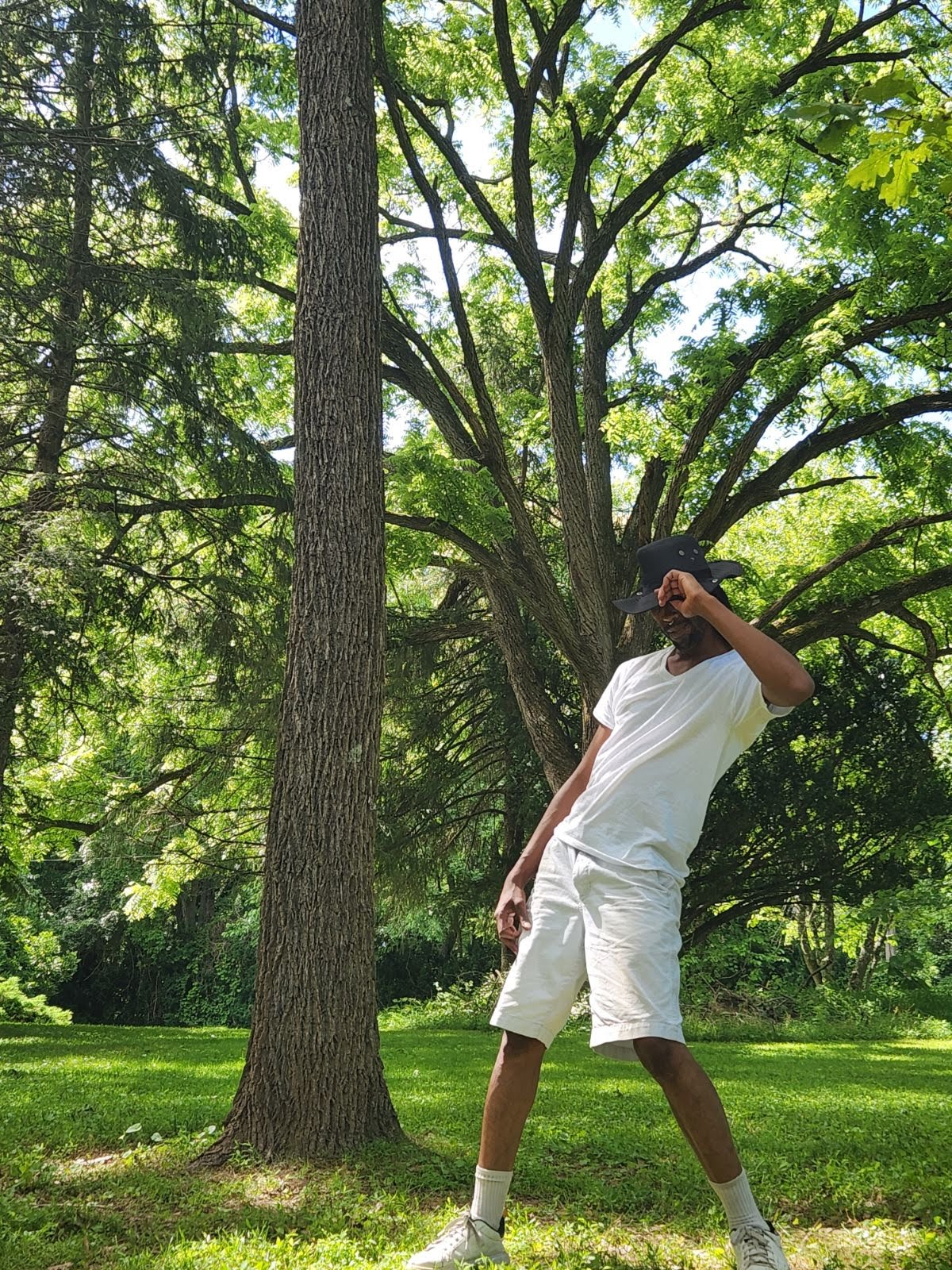
Staff have wanted to share the wonders of the Garden, grounds, and biodiversity here with more children for ages, and thanks to the management, structures, resources, and practices of the Community Ecology Institute (CEI), of which the Garden is now a part, we were able to give it a go with this initiatory offering. Over 25 families joined us on that perfect Sunday and explored the biota of every stretch and edge of the property.
CEI’s mission is cultivating communities where people and nature thrive together. In addition to the expanded offerings here at The Green Farmacy Garden, CEI offers a variety of innovative, meaningful experiential education programs for people across the lifespan, which you can explore on the Programs page of the website. Some activities with A Community of Families in Nature are still open for summer registration, and fall registration will open mid-July.
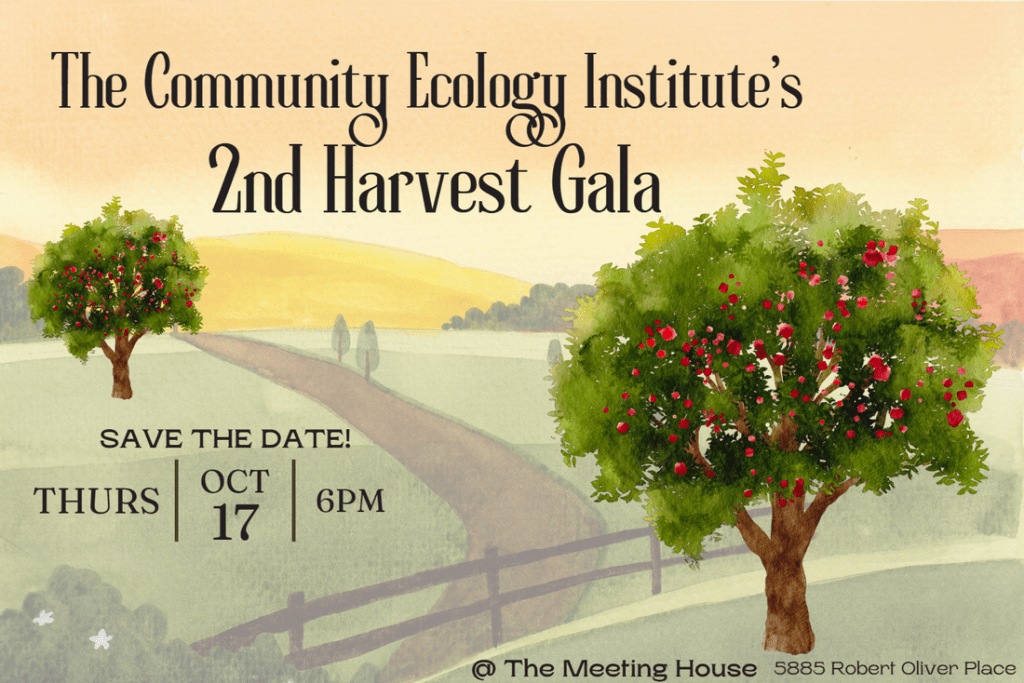
A fun way to support and connect with CEI as a whole, if you’ve been looking for such an opportunity, would be to join us for our October 17 Harvest Gala fund-raising event, where you can meet, mingle, and nosh with a lot of our staff, learn about the various program offerings, bid on silent auction items, enjoy musical entertainment, and get a big picture sense of the impact CEI’s work makes in our community of place.
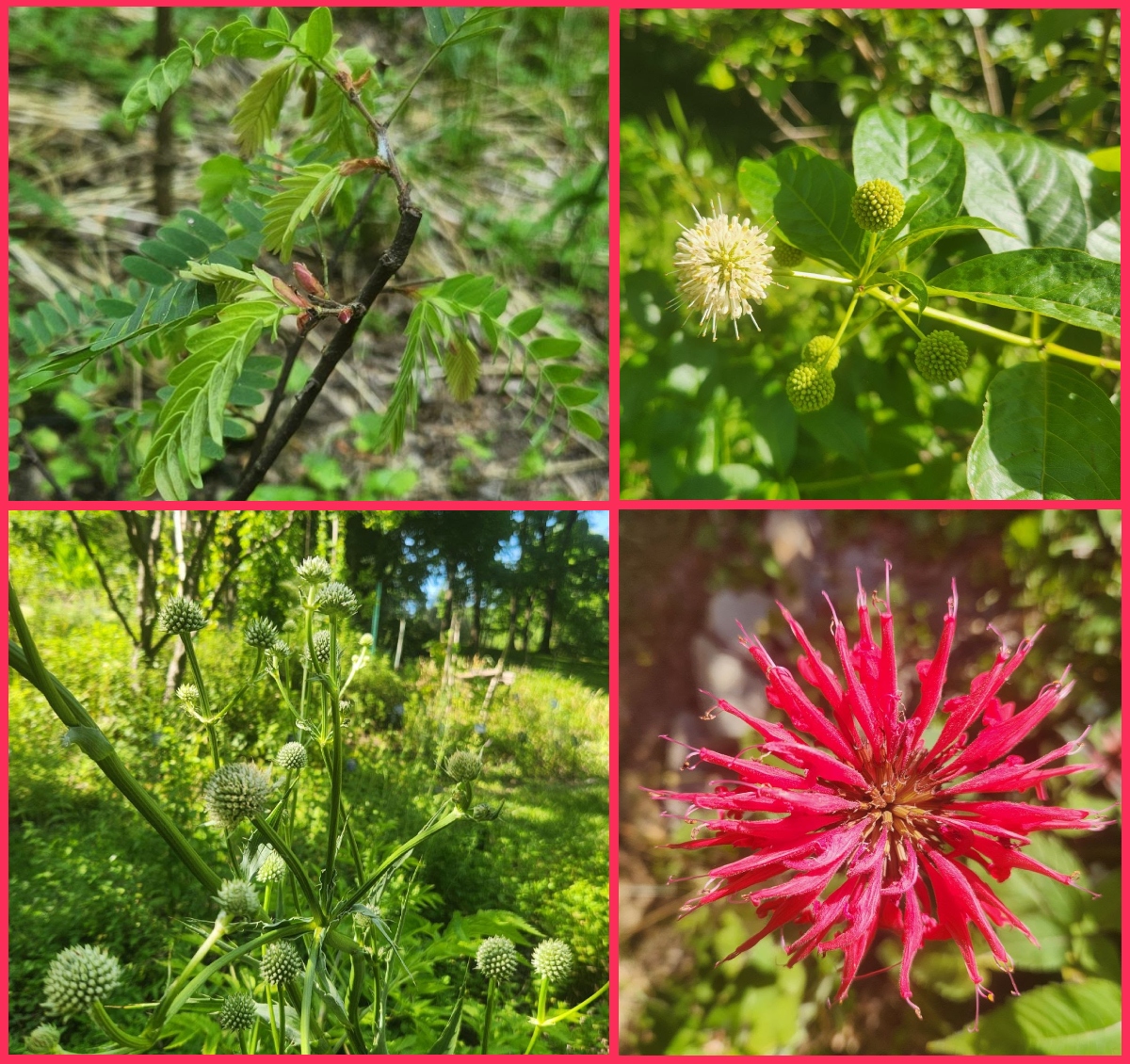
And now, back to our regular Garden update! We’ll open with some of the delighted species I mentioned, below clockwise from top right: Amla (Phyllanthus emblica), happily pushing out perfect new leaves despite the recent drought, through which even our regular drip irrigation regime couldn’t keep a lot of the plants sufficiently hydrated; native Buttonbush (Cephalanthus occidentalis) looking lush in the moist and shady Immunity plot; native Beebalm (Monarda didyma) putting on its own fireworks display; and the first chaotic bloom of our Rattlesnake Master (Eryngium yuccifolium)
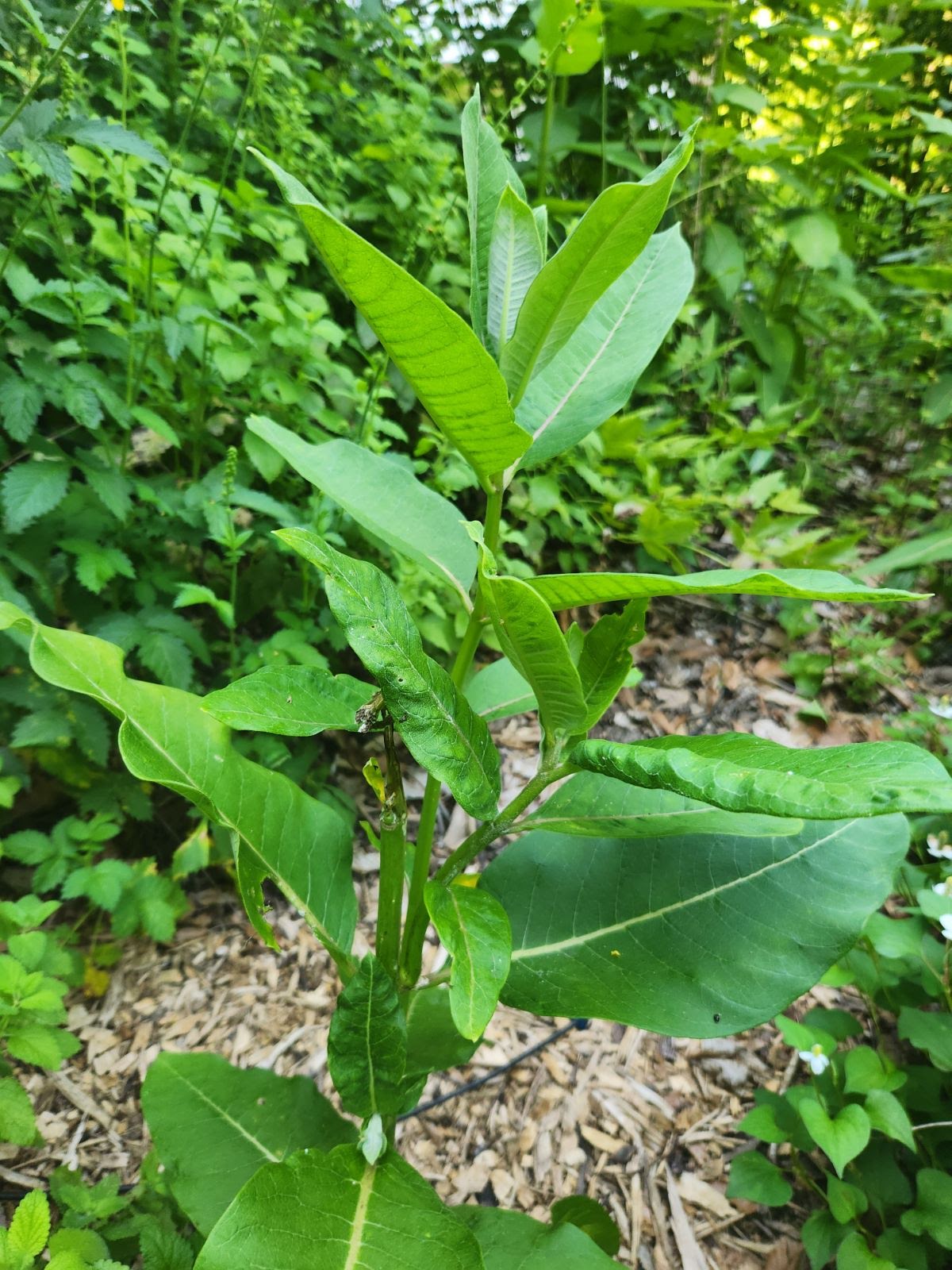
Below are two plants that were chomped earlier this season, bouncing back with vigor: Common Milkweed (Asclepias syriaca) left and Valerian (Valeriana officinalis) right. The “Chelsea chop” is a common gardening technique where gardeners cut a plant back early in its season so that it will branch out and produce more blooms at shorter heights, preventing some that might otherwise grow tall and spindly from flopping over as they bloom and set seed. The reason that works is the plants’ adaptation to respond in this way to herbivory. This Valerian wound up being one of the taller specimens in the garden anyway!

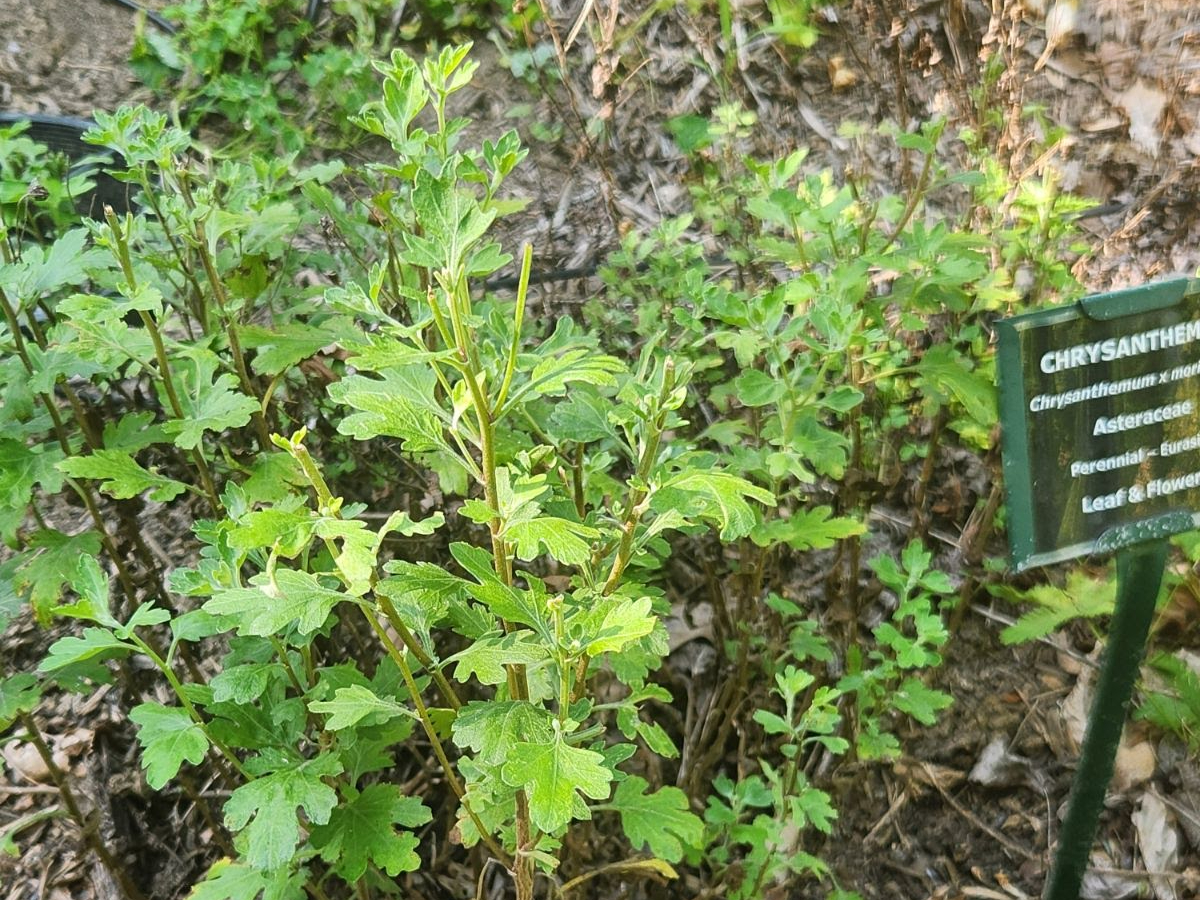
Many of the species our herbivorous neighbors have been munching aren’t ones we would normally cut back, but this Chrysanthemum x morifolium is. I love when the deer help with the gardening!
One of my favorite animal signs are these Leaf-cutter bee harvests. For some reason, they really like to use the leaves of Dioscorea villosa, and do so every year! These native bee species use the circles they cut (bite) from leaves to build cells to hold eggs in their nests.


Bumblebees love the Common Milkweed (Asclepias syriaca) that’s rapidly proliferated in the native section of Terrace A after germinating there a couple seasons ago. This month I learned that Milkweeds are high-stakes nectar sources for many pollinators, because their pollination strategy requires the insect to pull their leg out of a sticky slit where they pick up the flower’s pollinia. Bumblebees are larger than many other pollinators, and we’ve never seen a dead one in the Milkweed, but folks in the region have been seeing dead honeybees who didn’t manage to escape their Milkweed traps!

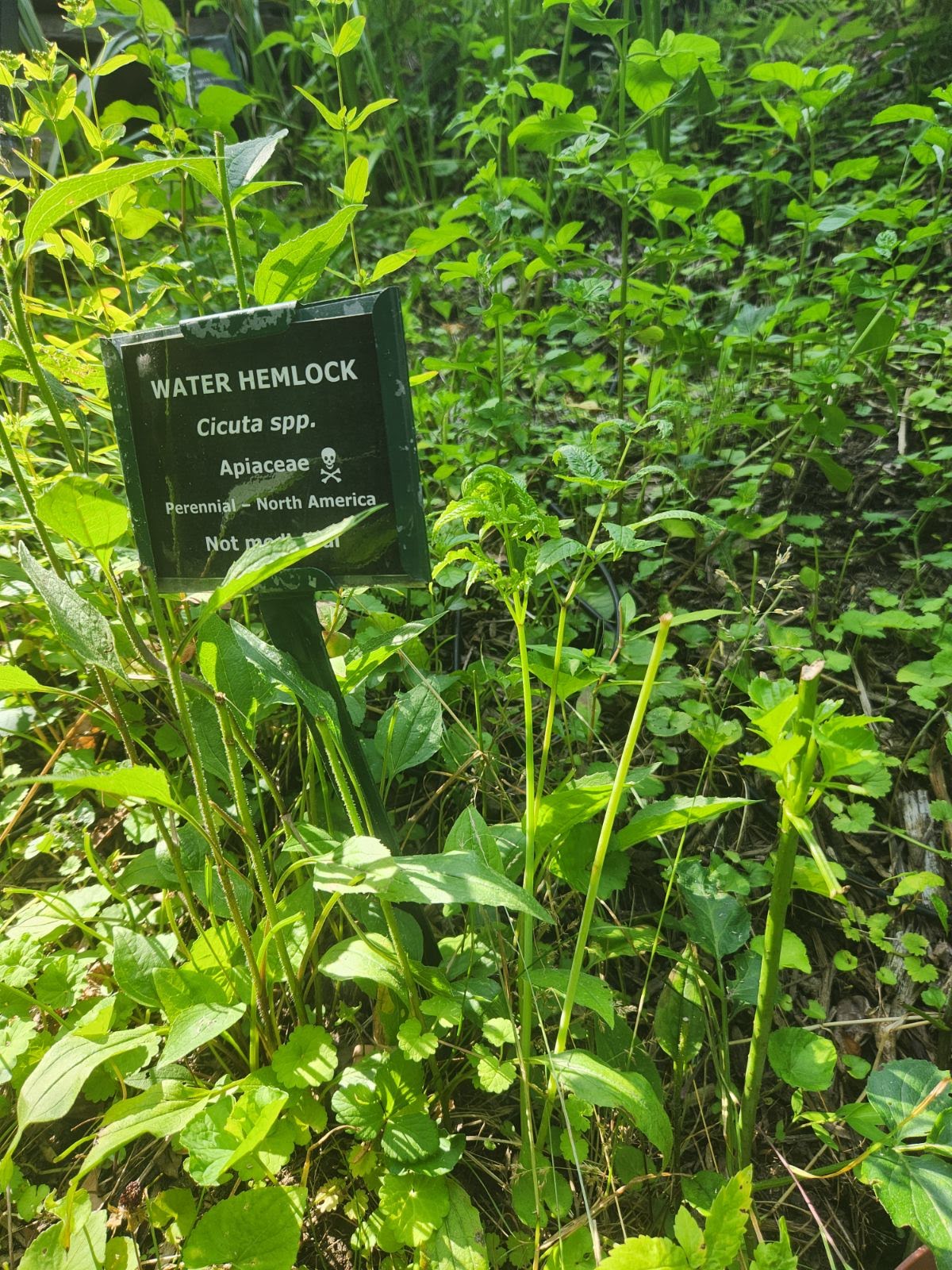
Deer (and Groundhog, and bunnies) continue to appreciate the Garden’s abundance and diversity. Instead of dumping all the photos, today I’ll just offer these 2 outstanding examples: the deer are hammering the Sochan (Rudbeckia laciniata) in the Garden this season, but fortunately this resilient, edible, and medicinal native plant has self-seeded all over the grounds, and the plants by the pond, the magnolia, and around the house are being left largely unmolested. Water Hemlock (Cicuta maculata) is widely considered the deadliest plant in our region (surpassing even the better-known Poison Hemlock, Conium maculatum), with only a small amount capable of killing even large mammals like humans: “cicutoxin.. can cause delirium, nausea, convulsions, abdominal pain, seizures, and vomiting within 60 minutes of ingestion – frequently leading to death.” Hopefully it was a large deer who sampled 2 fronds of this specimen along with the Echinacea (Echinacea spp.) and Elder (Sambucus spp.).. and maybe they spat it out without ingesting a deadly dose of cicutoxin??

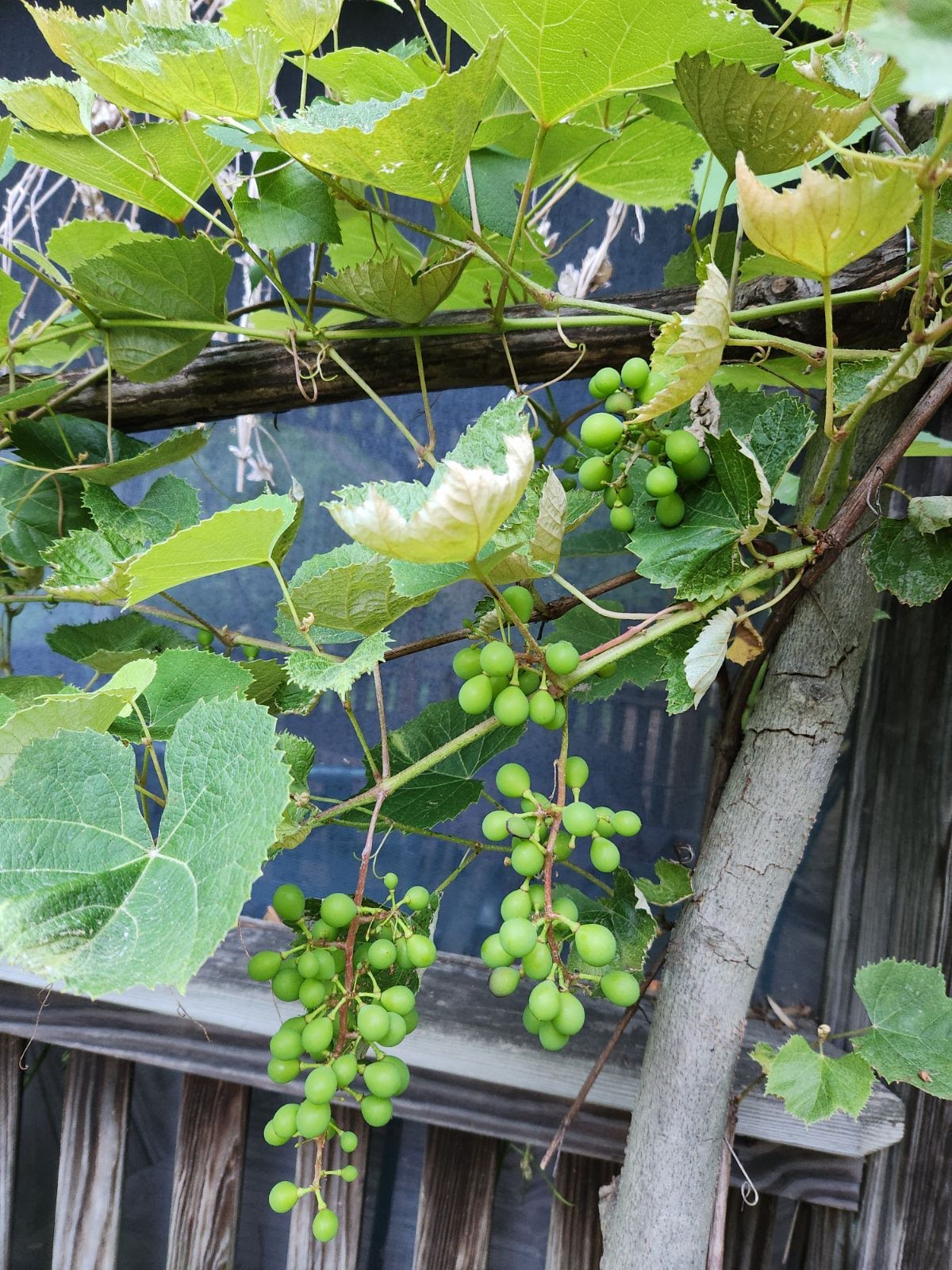
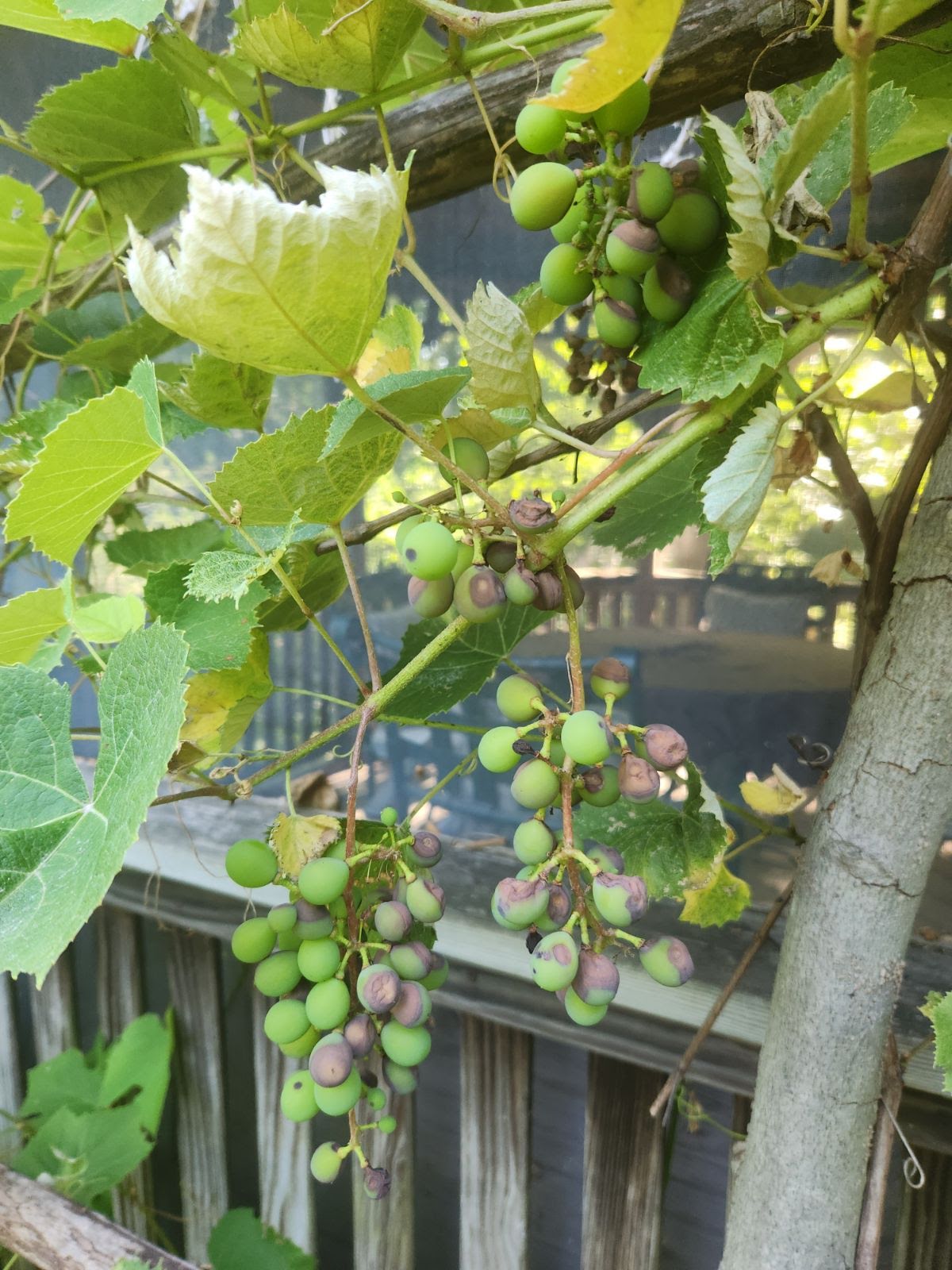
Despite looking great on June 12, Black Rot (Guignardia bidwellii) devastated a lot of fruits in these grape clusters by June 19, and more beyond:
As always, please explore our public event offerings to experience all this intrigue in person, this month including a Tuesday evening Climate Café and more! -Veri
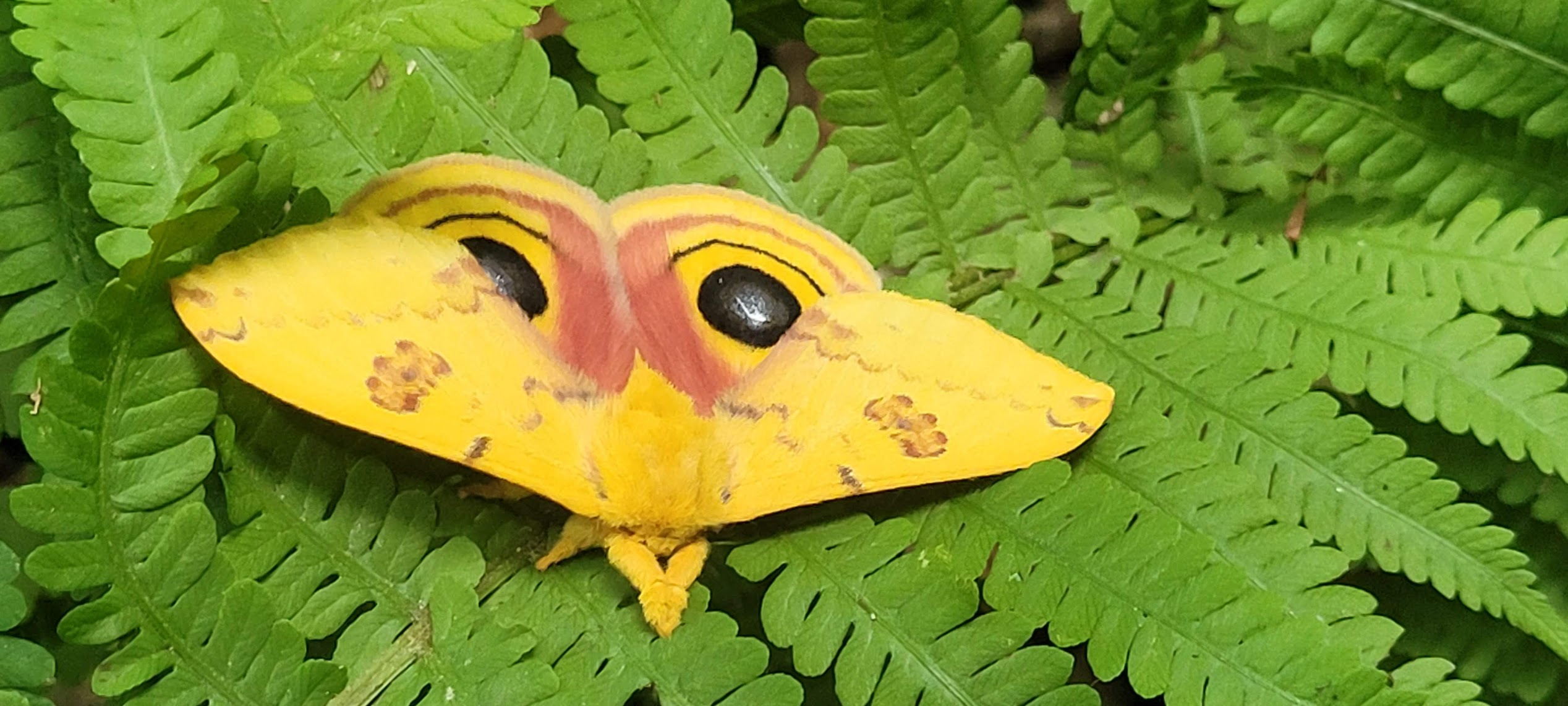
All photos the creative works of Veri Tas, except Io moth, kids-in-walnut, and creepy-crawlies by Julie Biedrzycki


 The Green Farmacy Garden, care of CEI
Pingback: Snakes and Skinks and Newts, Oh My! | The Green Farmacy Garden, care of CEI